
MATERIAL GUIDE · PMMA
What Is Acrylic? PMMA Properties, Types, and Uses in Custom Products
A practical material guide for retail display, branded merchandise, and American mahjong buyers
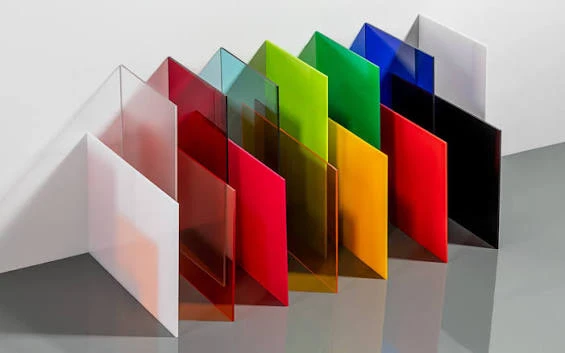
Acrylic is a transparent, rigid thermoplastic widely used for display panels, retail fixtures, signage, and custom decorative products. In these applications, acrylic usually means polymethyl methacrylate (PMMA), a plastic made from methyl methacrylate (MMA). Clear grades can transmit approximately 92% of visible light, and an acrylic sheet weighs roughly half as much as a glass sheet of the same size and thickness. It can be cut, machined, formed, printed, and assembled into finished products. However, acrylic is not unbreakable, scratch-proof, or automatically suitable for alcohol-based cleaning, high heat, or every manufacturing process.
For a custom order, the useful question is not simply “Is it acrylic?” but which PMMA grade, sheet-making method, thickness, surface finish, and assembly approach fit the intended use? The answers influence appearance, sample acceptance, cost, packaging, and repeat-order consistency. This guide explains the material and the decisions to confirm before requesting a quotation.
What Is Acrylic Made Of?
In sheet and fabricated-product purchasing, acrylic most commonly refers to PMMA (polymethyl methacrylate). Manufacturers produce this polymer by reacting methyl methacrylate monomer; the resulting material can be supplied as sheet or other forms. PMMA is a thermoplastic: it can soften when heated and can be shaped using suitable, controlled processes.
The word acrylic is broader in other industries, where it may refer to acrylic paints, coatings, adhesives, or resins. Those products are not necessarily the same as a rigid PMMA sheet. PLEXIGLAS® and ACRYLITE® are trademarks for particular acrylic product families, not proof that an unbranded sheet meets their published specifications. When a named grade matters, request its manufacturer, product code, and technical data sheet (TDS).
Which Acrylic Properties Matter for a Custom Product?
| Property | Why buyers choose it | What still needs checking |
|---|---|---|
| Optical clarity | Clear PMMA can provide a glass-like view of displayed products. | Color, thickness, texture, print layers, edge quality, and the actual grade affect appearance. |
| Low weight | At comparable dimensions, acrylic is substantially lighter than conventional glass. | Packed dimensions, supports, protective materials, and freight costs still matter. |
| Rigid, formable sheet | Panels can be cut, machined, and heat-formed for certain designs. | Thickness, bends, notches, joints, and fabrication stress require review. |
| Impact behavior | Acrylic generally resists breakage better than ordinary glass. | It can crack; high-impact environments may call for a different material. |
| Color and finish options | Clear, tinted, opaque, frosted, and specialty surface grades may be available. | Exact color, finish, minimum production quantity, and availability vary. |
| Weathering | Many PMMA grades offer useful outdoor light and weather resistance. | Outdoor life, UV-filtering performance, coatings, and exposure conditions are grade-specific. |
| Surface care | Acrylic is suitable for attractive, cleanable retail surfaces when handled correctly. | Scratches, chemical cleaners, and stress crazing are important service risks. |
The often-quoted 92% light transmission refers to suitable clear sheet grades; it should not be assigned to every colored, frosted, printed, or multilayer product. Similarly, general material properties do not establish a finished display’s safe load, a charm’s durability, or a mahjong tile’s approved specification.
Cast vs. Extruded Acrylic: What Is the Difference?
Both cast acrylic and extruded acrylic are PMMA, but their production routes can lead to different fabrication and purchasing considerations. Some manufacturers also offer continuous-cast sheet as a third category.
| Buying decision | Cell-cast acrylic | Extruded acrylic |
|---|---|---|
| Production method | MMA-based material polymerized in a sheet-forming cell. | PMMA material melted and passed through an extrusion die. |
| Typical strengths | Broad color/thickness options; good optical quality; often advantageous for machining and certain solvent-sensitive fabrications. | More consistent sheet thickness; efficient continuous production; often lower material cost and convenient thermoforming. |
| Trade-offs | Thickness variation can be greater; purchasing price may be higher. | Some grades are more sensitive to machining heat, solvent exposure, or stress cracking. |
| Typical evaluation | Visible premium panels, custom-color components, polished or detailed parts. | Repeat panels, dividers, formed shapes, and cost-sensitive parts where the tested grade is suitable. |
| What to verify | Actual thickness tolerance, grade, finish, machining and bond requirements. | Actual thickness tolerance, appearance, stress, forming and bonding requirements. |
There is no universal rule that cast is always better or extruded is always cheaper for the finished product. Sheet price is only one part of cost. Cutting yield, labor, edge finishing, assembly, rejects, protective packaging, and ordered quantity can change the comparison. Request a grade-specific sample if the edge appearance, flatness, bonding, or fit is critical. A continuous-cast option should be evaluated against its own supplier data rather than assumed equivalent to either column.
How Does Acrylic Become a Finished Product?
Acrylic sheet can be transformed through several processes. The appropriate route depends on material grade, geometry, finish, and production evidence—not on a photograph alone.
- Cutting and machining: Laser cutting and computer numerical control (CNC) routing may create profiles, openings, and precision features. Edge condition and dimensional tolerance should be checked on samples.
- Bending and forming: Controlled heat may allow bends, curves, or molded shapes. Forming behavior varies by sheet type and thickness; visible stress or distortion can make a design unacceptable.
- Edge finishing and joining: Polishing, mechanical assembly, and selected bonding systems can affect clarity and durability. Adhesive compatibility, residual stress, and visible bond lines need review.
- Decoration and printing: Suitable acrylic grades may be used with UV printing, screen printing, and other artwork processes. Ink adhesion, front/back orientation, opaque white layers, and transparent areas should be specified and sampled.
- Component integration: Standee bases, hanging hardware, layered assemblies, magnetic parts, LED elements, or NFC components are separate design decisions. Their fit, performance, and manufacturing feasibility cannot be inferred from the word acrylic.
A product may look simple from the front but still require several manufacturing and inspection steps. A finished-product quotation should specify the complete construction, not just the base sheet.
Where Is Acrylic Used in Retail Displays and Branded Products?
The examples below show material applications, not a claim that every pictured design, specialty process, or functional result has already been manufactured by TC Display & Merch.
Retail Displays and POS/POP Fixtures
Clear panels, risers, trays, display cases, countertop fixtures, and branded signs can help present cosmetics, skincare, fragrance, jewelry, and other retail goods. The critical inputs include product dimensions and weight, counter footprint, viewing angle, access for replenishment, branding, and shipment configuration. A beautiful transparent design is insufficient if it tips, blocks access, or is easily damaged in transit.
For product-family options, see Acrylic Displays.
Acrylic Merchandise
Acrylic is used for printed keychains, standees, ornaments, photocard holders, and other branded accessories. Buyers should define cut lines, printed faces, white-ink layers, clear borders, hole or base fit, quantity per artwork design, and individual packaging. Dry shaker, liquid-filled, layered, and NFC products have different construction and verification requirements; they are not interchangeable simply because they contain acrylic.
Browse the Acrylic Merchandise product family for specific formats.
American Acrylic Mahjong
Acrylic can also be selected for customized American mahjong tiles and associated product designs. Surface appearance is only one consideration: finished tile dimensions, thickness, weight, face artwork, consistent backs, edge feel, accessory fit, and set-level packing need approval. A complete set requires a project-specific, face-by-face inventory including any Jokers, Flowers, blanks, and spare tiles; no universal tile count should be assumed.
See American Acrylic Mahjong for the relevant product family.
Acrylic vs. Glass vs. Polycarbonate: Which Should You Consider?
| Main concern | Acrylic (PMMA) | Conventional glass | Polycarbonate (PC) |
|---|---|---|---|
| Clear product presentation | High clarity in suitable grades | High clarity | Clear grades available; appearance depends on grade and coating |
| Relative weight | Lighter than glass at equal dimensions | Heavier | Lightweight |
| Impact exposure | Better breakage resistance than ordinary glass, but can crack | Brittle; breakage type depends on glass grade | Generally favored when high impact resistance is the priority |
| Surface abrasion | May scratch; care or suitable coating may be needed | Generally harder surface | Surface scratching may also require suitable coatings |
| Fabrication | Well suited to many cut, form, print, and assembled products | Different fabrication and finishing requirements | Can be fabricated, but grades and processes differ |
| Best starting question | Is clarity and an attractive finished edge the priority? | Is a hard glass surface or a specific glazing requirement essential? | Is repeated impact or rough handling the dominant risk? |
Material choice depends on the finished part and its service conditions, not an unconditional ranking. For protective applications, food contact, children’s products, electrical integration, or regulated uses, request the applicable grade documentation and required product-level testing rather than relying on a generic comparison.
What Are Acrylic’s Limitations?
Scratches: A clear retail panel may show scuffs from handling or abrasive wiping. Agree what surface marks are acceptable and how parts will be protected during packing.
Cracking and stress crazing: Cut edges, tight holes, sharp corners, forming stress, and unsuitable cleaners or bonding chemicals can contribute to cracks or fine surface crazing. A sample should reproduce the real geometry and expected cleaning conditions.
Heat and loading: Acrylic can soften or deform under unsuitable temperatures or sustained mechanical loads. Thickness alone cannot establish safe load or service temperature.
Environmental and functional claims: General PMMA weathering performance does not prove that a specific printed product is outdoor-rated, UV-blocking, food-contact suitable, scratch-proof, or leak-proof. Special functions require the corresponding material and finished-product evidence.
Packing and transport: Protective films, dividers, edge protection, and carton design affect scuffing, chipping, and arrival condition—especially for high-gloss, multi-part or retail-ready products.
How Should Buyers Specify Acrylic in an RFQ?
| Specify | Useful input to provide |
|---|---|
| Application | Retail counter, merchandise, mahjong, indoor/outdoor, handling and cleaning conditions |
| Material | PMMA grade, cast/extruded/continuous-cast preference or permission to recommend |
| Finished size | Dimensions, thickness, opening and hole locations, relevant tolerances |
| Visual finish | Clear/tinted/frosted/opaque, color reference, gloss or texture, edge finish |
| Artwork | Versioned files, cut line, front/rear orientation, white ink, logo or approved artwork rights |
| Construction | Bends, tabs/slots, joints, hardware, assembly, required fit or load |
| Quantity | Total units and quantity per SKU/color/design; for mahjong, tiles-only vs complete sets |
| Sample approval | Critical visual, dimensional, fit and functional acceptance criteria |
| Packing and delivery | Individual protection, pack-out, destination, delivery date and shipment condition |
| Budget/quotation basis | Target price range if available, tooling/sample assumptions, and required freight/tax scope |
For an initial enquiry, TC Display & Merch’s public reference starting points are 100+ units for Acrylic Displays, 300+ pieces for Acrylic Merchandise, and 50+ sets for American Mahjong sets. These are screening guidelines, not fixed minimums for every design, component, or special construction; the actual quantity and feasibility must be reviewed by product and supplier.
What Should Be Checked on a Sample?
Before approving a custom acrylic product, agree on the relevant acceptance criteria: material grade and thickness; dimensional fit and assembly; optical clarity, color, and surface finish; edge chips and scratches; artwork alignment and adhesion where relevant; hardware or base fit; packaging and transit protection; and any application-specific test. A retail display may additionally need a stability and replenishment check. A merchandise item may need a hole, clasp, or layered-component check. American mahjong requires tile-face inventory, consistent backs, accessories, and complete set pack-out review.
A sample sign-off should identify the approved artwork version, sample identity, inspection method, and accepted deviations. A supplier’s generic PMMA data sheet does not by itself certify the performance of the assembled product.
How Do You Clean Acrylic?
For ordinary uncoated acrylic sheet, a conservative starting method is lukewarm water, mild soap, and a clean soft cloth or microfiber cloth, followed by a gentle rinse and careful drying. Avoid abrasive pads. Do not assume that alcohol sprays, acetone, strong solvents, or general glass cleaners are safe: they may damage certain acrylic surfaces or contribute to crazing. Coated specialty grades may have different instructions. For beauty retail fixtures that are cleaned frequently, confirm the exact cleaner against the selected sheet, inks, and joints before approving production.
Frequently Asked Questions
1. Is acrylic plastic or glass?
Acrylic used in display panels and merchandise is generally PMMA plastic, not mineral glass. It can provide a glass-like appearance but has different impact, scratch, heat, and fabrication behavior.
2. Is acrylic the same as Plexiglass?
“Plexiglass” is often used conversationally for acrylic. PLEXIGLAS® is a specific trademarked product family. Do not assume an unspecified acrylic sheet is the same branded grade.
3. What is the difference between PMMA and acrylic?
In rigid sheet and custom-product contexts, acrylic commonly means PMMA. In paints, adhesives, and coatings, the term acrylic may refer to other acrylic polymers.
4. Is cast acrylic always better than extruded acrylic?
No. Cast and extruded PMMA have different trade-offs in thickness control, processing, color selection, and cost. Choose based on actual grade, geometry, sample quality, and finished-product economics.
5. Is acrylic stronger than glass?
Acrylic generally offers better breakage resistance than ordinary glass under many conditions, but it can crack or fracture. Neither material should be assumed suitable for a specified load or safety application without design verification.
6. Does acrylic scratch easily?
It can be scratched by hard contact or abrasive cleaning. Surface finish, handling, protective packaging, and any specialty coating influence the result.
7. Will acrylic yellow in sunlight?
Many quality PMMA grades have good weathering performance, but color stability depends on the specific grade, additives, coatings, printing, and exposure. Outdoor claims need product-specific evidence.
8. Is acrylic safe for food contact or hot drinks?
Not automatically. Food-contact suitability and thermal performance depend on the specific grade, coatings, inks, and finished-product requirements. Do not infer approval from a generic PMMA designation.
9. Can acrylic be recycled?
PMMA is technically recyclable, and some manufacturers offer recycled-content grades. Actual collection, sorting, and recycling options depend on local facilities and contamination or mixed components; a product is not automatically accepted in municipal recycling.
10. What should I send to quote a custom acrylic product?
Provide the intended use, drawings or reference images, finished dimensions and thickness, appearance and print requirements, assembly details, quantity per design, packaging, destination, and target date. The exact material and process can then be reviewed before sampling or quotation.
Discuss an Acrylic Product Specification
TC Display & Merch coordinates custom-product enquiries across Acrylic Displays, Acrylic Merchandise, and American Acrylic Mahjong. Share your drawings or references, intended use, quantity breakdown, packaging, and target market. Material selection, construction, sample requirements, and quotation scope are reviewed for the specific project; no unverified process or performance is guaranteed.
Start a Project — Submit your project requirements
Technical References
These sources explain general PMMA material properties. They do not confirm the brand, grade, manufacturing route, testing, or availability of any individual TC product.
- PLEXIGLAS® — What is PLEXIGLAS? — PMMA definition, brand distinction, optical properties and material forms.
- ACRYLITE® — How is acrylic made? — PMMA and methyl methacrylate.
- ACRYLITE® — Cast vs. extruded acrylic sheet — fabrication and purchasing trade-offs.
- PLASKOLITE — OPTIX Acrylic Sheet — extruded, continuous-cast and cell-cast PMMA product families.
- ACRYLITE® — Care and cleaning of acrylic sheet — cleaning guidance and solvent warnings.