
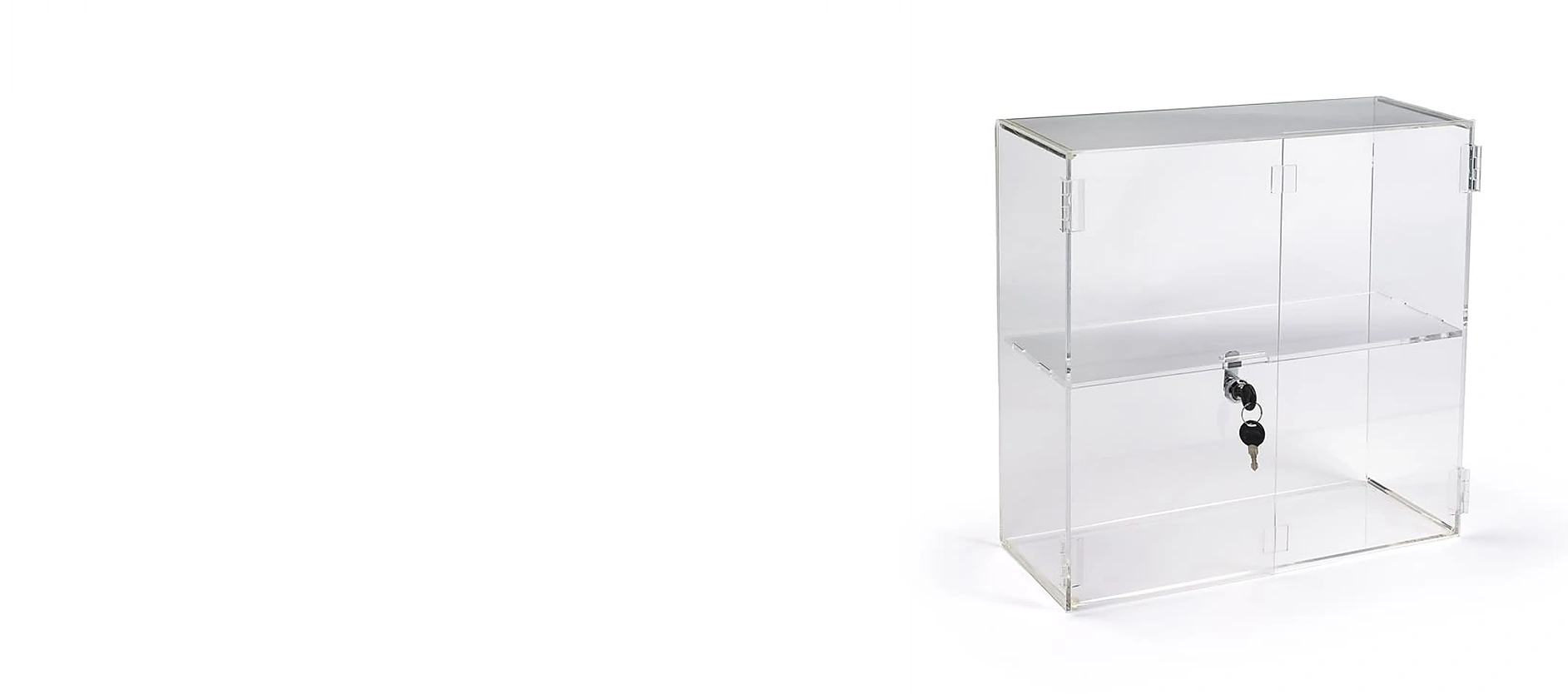
Custom Lockable
& Magnetic Acrylic
Display Cases
Custom lockable and magnetic acrylic display cases combine clear presentation with selected access and closure options. Explore keyed doors, sliding panels, magnetic lids, and removable access panels tailored to retail products, collectibles, and display requirements.
Product Types
View All Acrylic Displays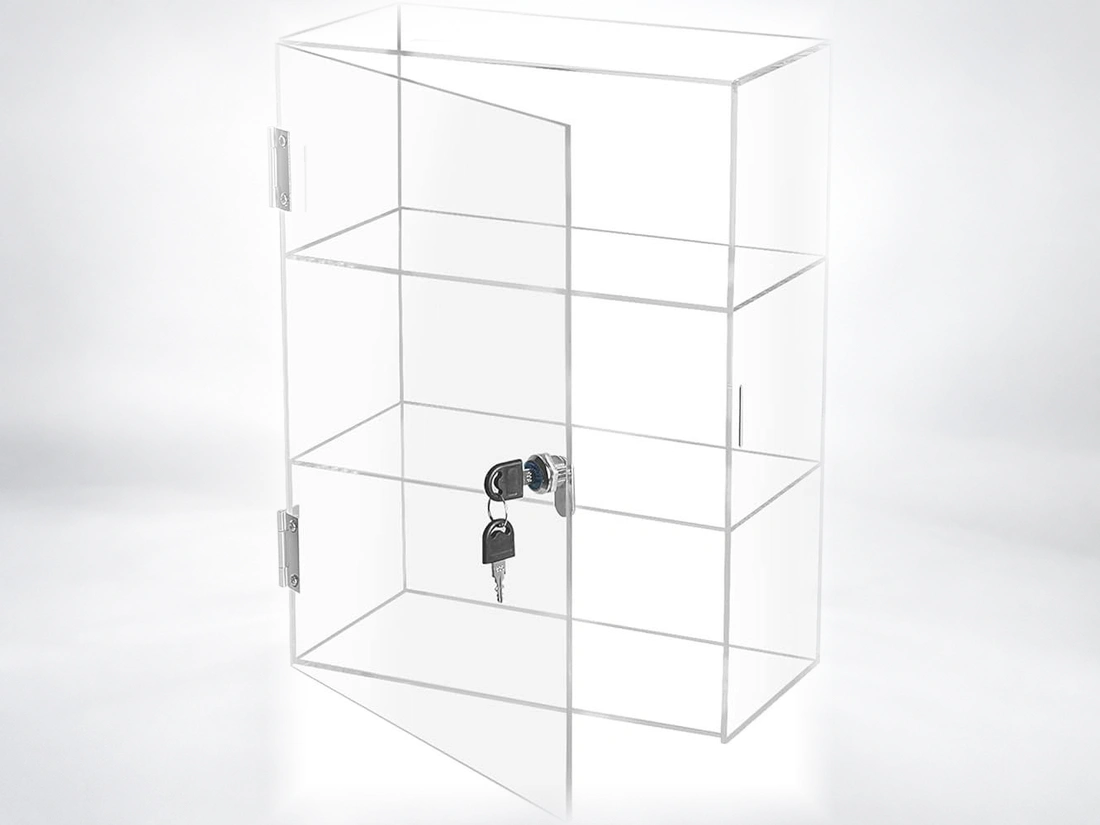
Keyed Hinged-Door Cases
Hinged access doors with separately specified mechanical locks for controlled opening.
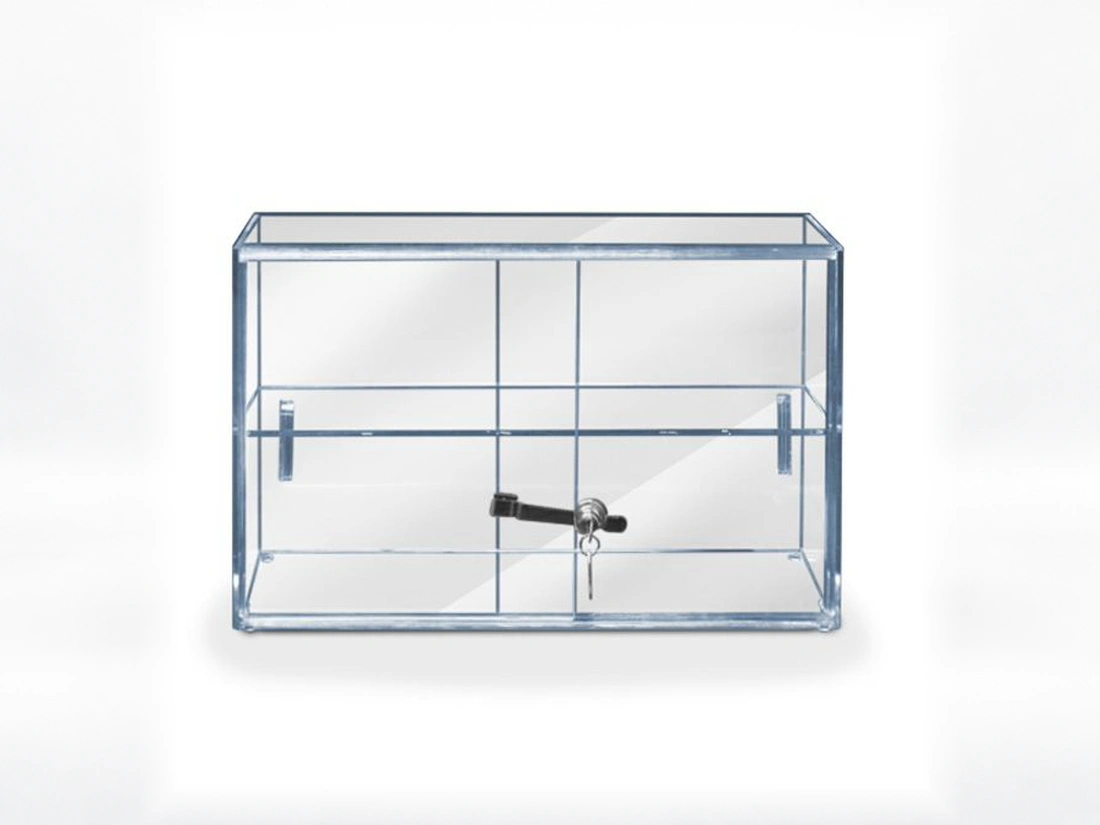
Lockable Sliding-Door Cases
Sliding access panels with compatible locking arrangements for retail display layouts.
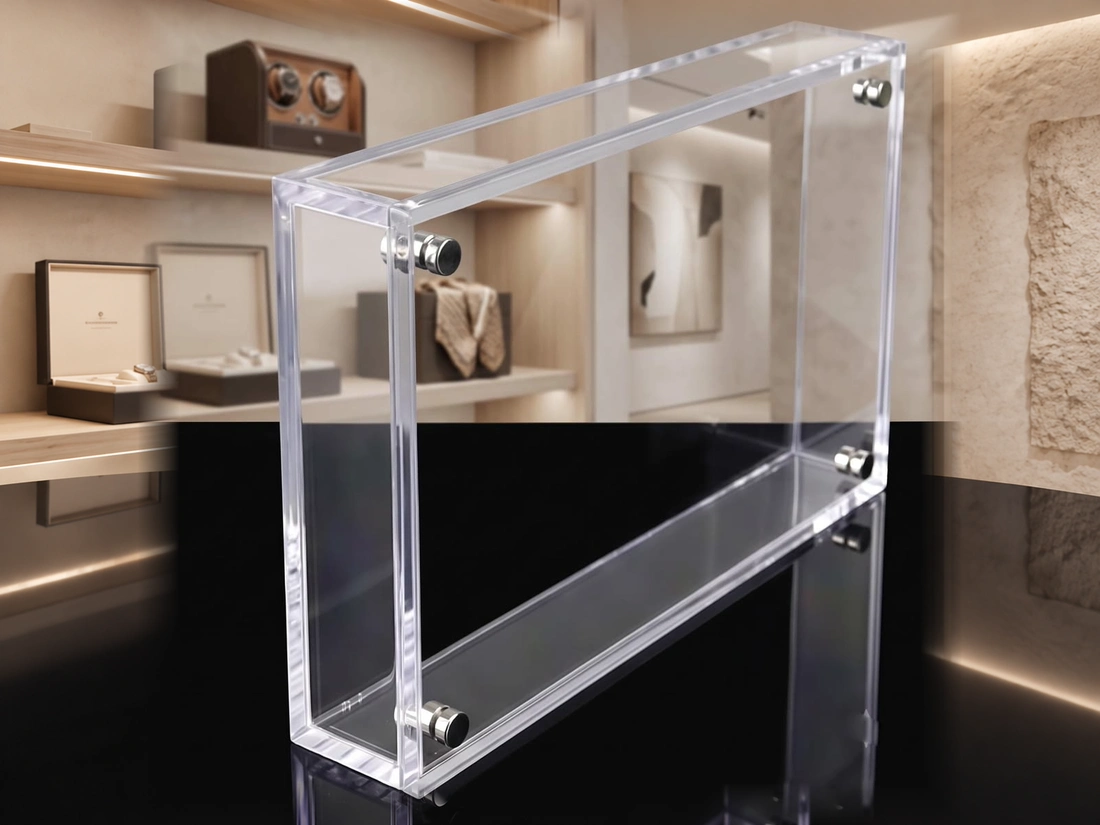
Magnetic-Lid Display Boxes
Removable magnet-held lids for convenient access to displayed items.
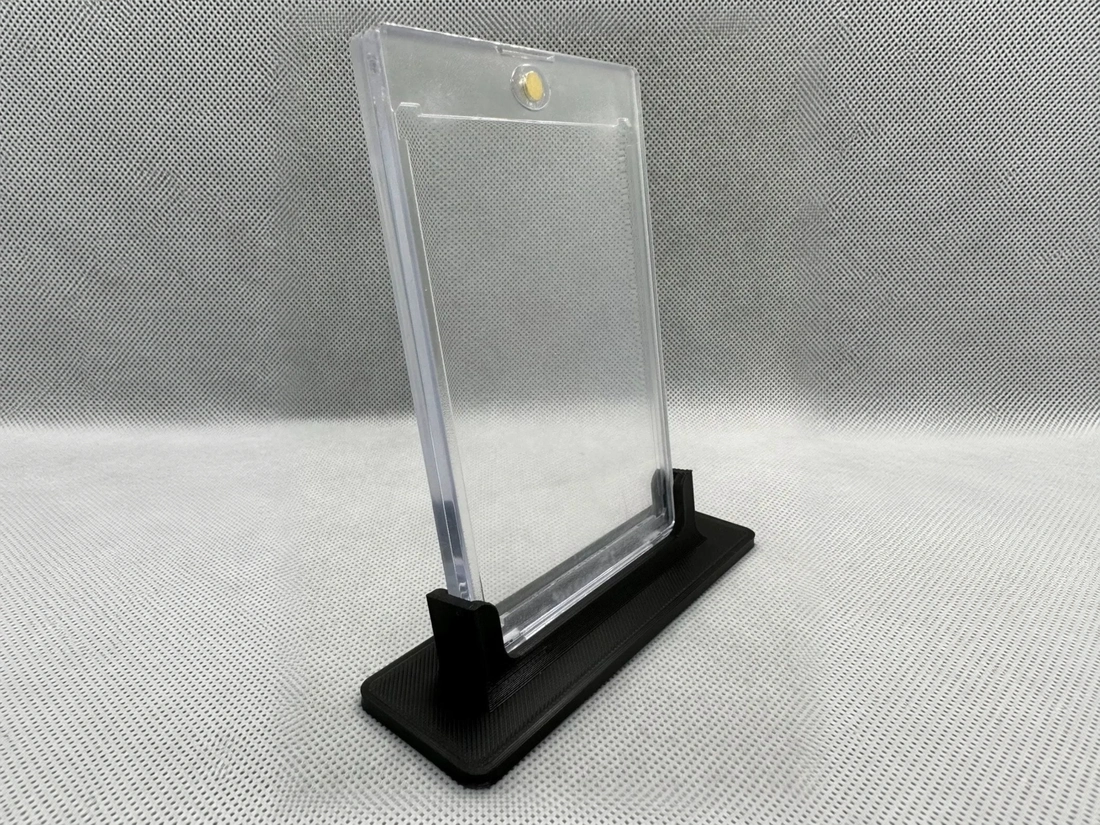
Magnetic Access-Panel Cases
Magnet-held front or side panels for display designs requiring removable access.
Customization & Specifications
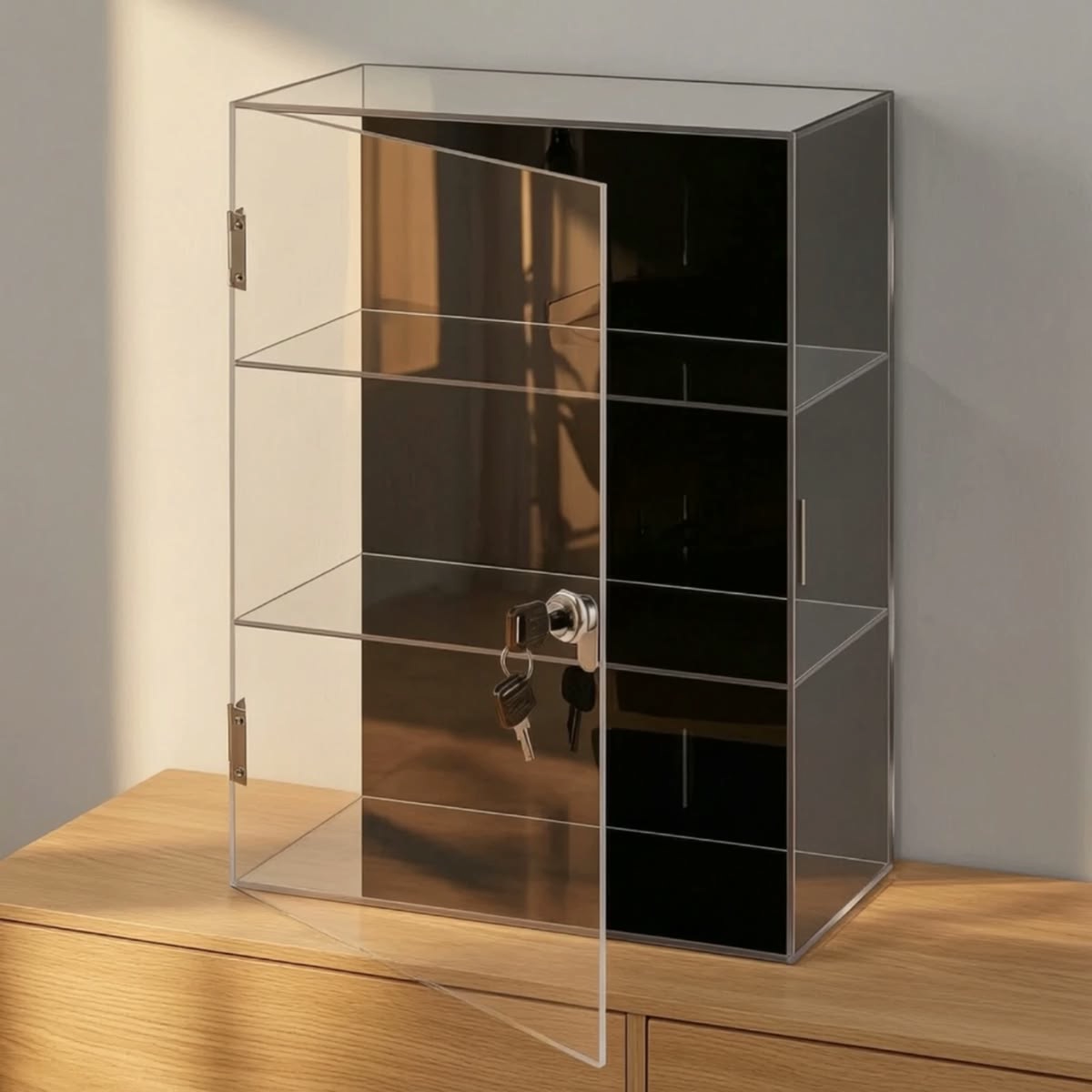
Locking & Magnetic ClosuresChoose the closure method around access and handling requirements.
A mechanical lock and a magnetic closure serve different purposes. A keyed lock restricts ordinary access through a specific opening, while magnets can help position or retain a removable lid or panel. Define whether the display needs a locked door, a magnetic lid, or another access arrangement. Lock position, magnet placement, closing action, and hardware compatibility should be reviewed for the intended structure. Magnetic retention alone should not be treated as a theft-resistant locking system.
Opening Method & ClearancePlan door movement, removable panels, and product access.
The opening arrangement should reflect how frequently the displayed items will be accessed. Hinged doors need sufficient swing clearance, sliding panels require space along their travel path, and removable magnetic lids need room for safe lifting and handling. Consider the surrounding shelves, counters, and display fixtures. Provide the intended access direction and typical handling requirements so the opening can be evaluated without interfering with the displayed products or nearby equipment.
Internal Dimensions & SupportsDefine usable interior space and product positioning.
Provide the maximum width, depth, height, and weight of the items to be displayed, including stands, packaging, handles, or other protruding parts. Internal clearance should allow for supports, the opening mechanism, and practical placement or removal of the items. If several products will share one case, identify their arrangement and contact points. Usable internal dimensions should be distinguished from the external case size in the approved drawing.
Acrylic, Magnets & HardwareReview material construction, alignment, and component fit.
Panel dimensions, acrylic thickness, joints, and hardware mounting methods all influence the display construction. Magnetic closure performance also depends on magnet selection, alignment, separation distance, retention method, and how the panel is handled. Hinges, locks, and other fittings introduce additional contact and loading points. The materials and connection details should be reviewed as a complete assembly, with relevant functional checks agreed for the intended use.
Branding, Keys & PackagingPlan display graphics, hardware sets, and protective packing.
Custom cases may include branded bases, graphic panels, internal supports, or product information areas. For lockable versions, identify the required lock and key configuration, quantities, and any case identification needs. Magnetic versions should have their removable components clearly defined. Packaging should protect acrylic panels, edges, locks, magnets, and associated hardware. For multi-location orders, specify the quantity and contents required for each display version or packing unit.
Applications
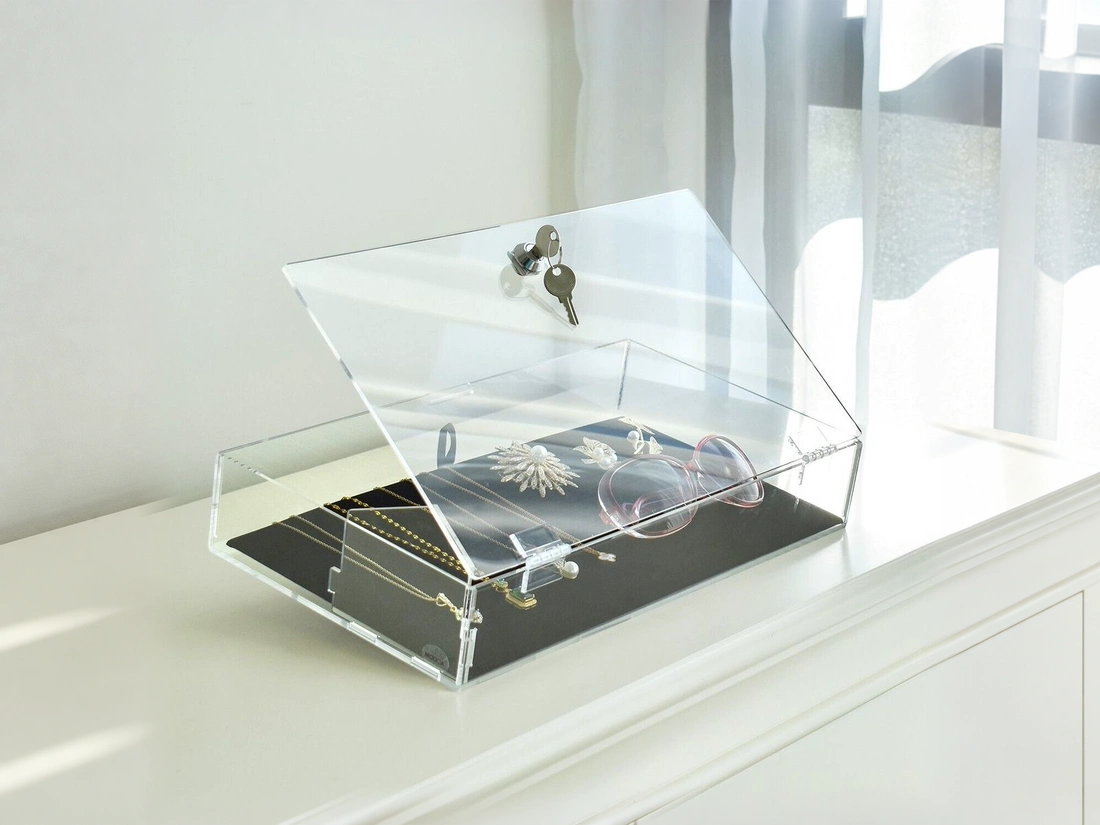
Jewelry & Watch Retail
Present selected jewelry and watches with defined access arrangements.

Collectibles & Memorabilia
Showcase figurines, memorabilia, and collector items with suitable removable or locked closures.

Premium Retail Products
Display selected merchandise while managing routine staff and customer access.

Exhibitions & Showrooms
Present models, samples, and valuable display items within organized cases.


Frequently Asked Questions
View All FAQsWhat is the difference between a lockable acrylic display case and a magnetic-lid display case?
A lockable display case uses a mechanical locking mechanism to restrict ordinary access to the contents. A magnetic-lid case uses magnets to position or retain a removable cover, usually making opening and closing more convenient. These are different functions. A magnetic lid should not be assumed to provide the same access restriction as a keyed lock. If limiting unauthorized opening is important, specify the required access controls and discuss an appropriate mechanical locking arrangement.
Should I choose a hinged locking door or a sliding lockable panel?
A hinged door may be suitable when there is enough space for the door to swing open and staff need convenient access to the contents. A sliding panel can be useful where front-opening clearance is limited, although the sliding path and usable opening width must be considered. Both designs require compatible locking hardware and suitable panel support. Provide the installation location, expected access frequency, and surrounding clearance so the opening arrangement can be evaluated.
How is the holding strength of a magnetic acrylic display lid determined?
Magnetic retention depends on the selected magnets, their orientation, alignment, separation distance, and how they are mounted within the structure. The size and weight of the lid and the direction of the opening force also matter. A magnet's nominal specification alone does not establish the performance of the complete lid assembly. Provide the expected handling conditions and closure requirements so retention and alignment can be assessed through an appropriate sample.
How do I determine the correct internal dimensions for a custom acrylic display case?
Measure the displayed item's maximum width, depth, and height, including any stand, packaging, handles, or protruding components. Internal clearance should also account for supports, fittings, and the space needed to insert or remove the object. A hinged or sliding opening may further limit the usable access area. Identify both the required internal dimensions and the overall external footprint in the drawing so the proposed case can be evaluated accurately.
Can multiple lockable display cases use matching keys or different key configurations?
Lock and key arrangements should be specified before the hardware is selected. Depending on the available lock components, a project may be evaluated for matching keys across several cases or different keys for individual cases. These options are not automatically available with every lock design. Provide the number of cases, intended access arrangement, and any key identification or spare-key requirements so suitable hardware and order configuration can be reviewed.
Are lockable or magnetic acrylic display cases theft-proof, dustproof, or UV-protective?
A mechanical lock can restrict routine access, but it does not automatically make an acrylic case theft-proof or establish a tested security rating. Magnetic closures generally provide retention or positioning rather than equivalent access control. Dust resistance depends on panel gaps, joints, and opening details, while UV protection depends on the selected material and its verified properties. If a defined level of protection is required, it should be specified separately and supported by appropriate design evidence and testing.
What materials, panel thickness, and hardware details affect display case durability?
The case dimensions, acrylic material, panel thickness, joints, and hardware attachment points all influence its structural behavior. Doors and removable panels may experience repeated handling, so alignment and connection details matter in addition to the appearance of the acrylic. For magnetic designs, the magnet retention method and surrounding material should also be reviewed. Provide the intended operating conditions and handling frequency so the construction and relevant sample requirements can be defined.
What should be checked on a lockable or magnetic display case sample before bulk production?
A physical sample can be discussed before bulk production, with its scope, cost, and preparation time confirmed for the project. Important checks may include internal fit, panel alignment, opening clearance, hinge movement, lock operation, magnetic closure retention, and surface appearance. The case should also be reviewed with the intended display item in place. Functional acceptance requirements should be agreed before testing, and approved changes should be recorded in the final production specification.
What affects MOQ and pricing for custom lockable and magnetic acrylic display cases?
MOQ and unit pricing depend on the case dimensions, acrylic construction, selected lock or magnet components, assembly requirements, finishing, branding, and packaging. Different closure designs may require different fittings, machining, and assembly work. A project containing several sizes, lock types, or magnetic configurations should identify the quantity for each version separately. This helps quotations reflect the actual hardware and production requirements rather than only the combined order volume.
What information is needed for a quotation, packaging plan, and delivery estimate?
Please share a drawing or reference image, the displayed item's dimensions and weight, and the required internal and external case dimensions. Specify whether you need a keyed lock, hinged door, sliding panel, magnetic lid, or removable access panel. Include any branding, internal supports, hardware or key requirements, estimated quantity per design, and packaging preferences. The delivery destination and target date will also help establish the project-specific quotation and production and shipping estimates.

Ready to Start Your Display Project?
Share your product, dimensions and quantity to discuss the next step.