

Custom Shaker
Acrylic Products
Custom shaker acrylic products for character merchandise, creator collections, and branded gifts. Explore keychains, standees, and hanging charms with loose decorative pieces inside a clear chamber, with artwork, movement, assembly, and sampling reviewed for each project.
Product Types
View All Acrylic Displays
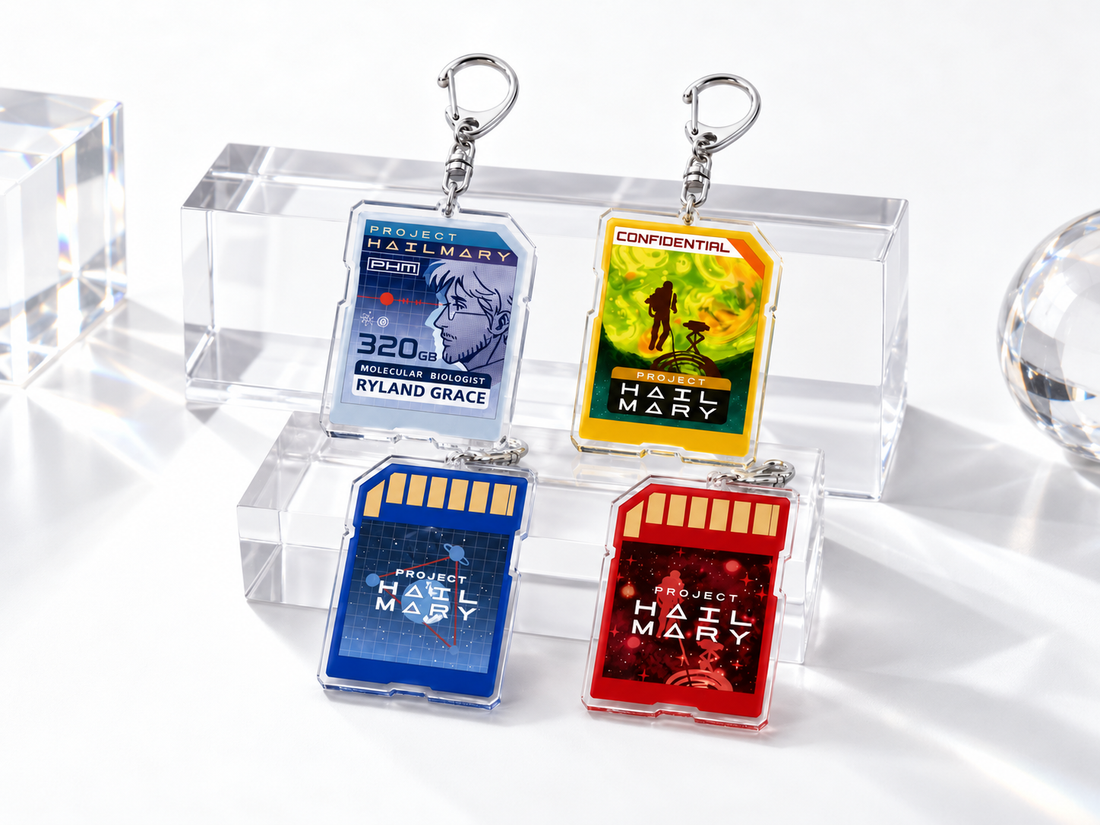
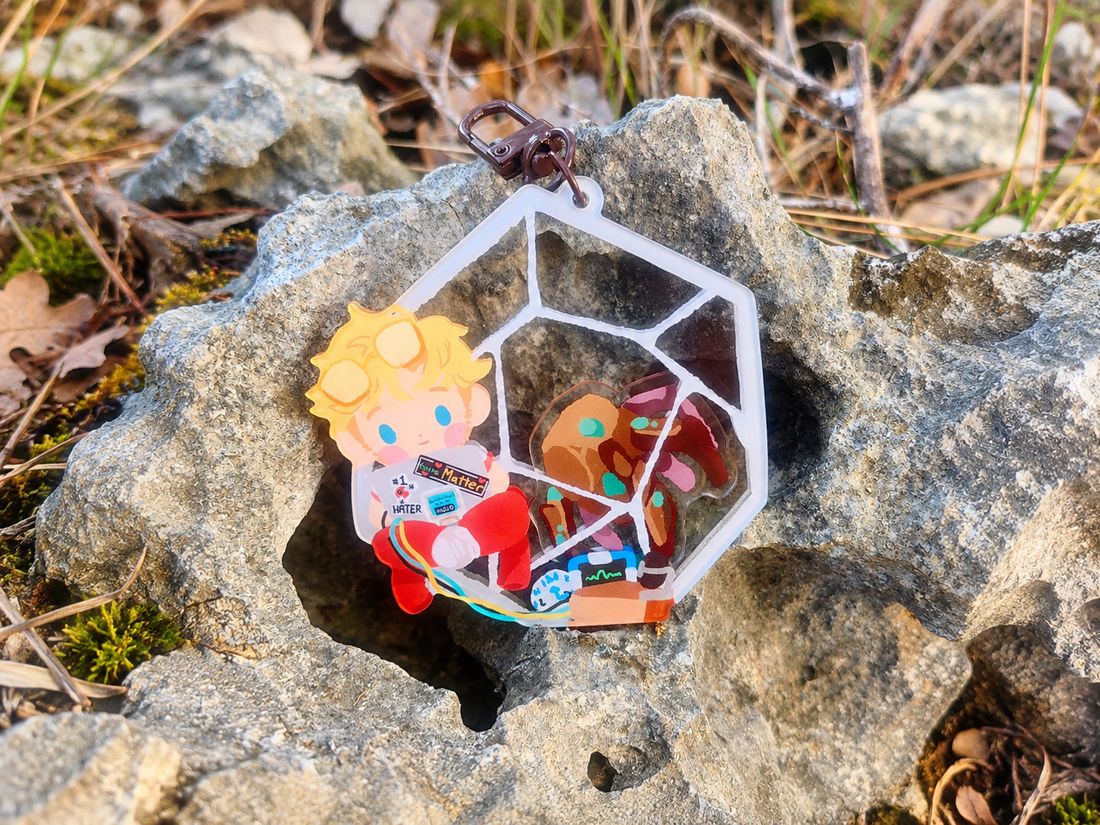
Shaker Acrylic Keychains
Explore keychain charms with loose acrylic pieces moving inside an enclosed chamber.
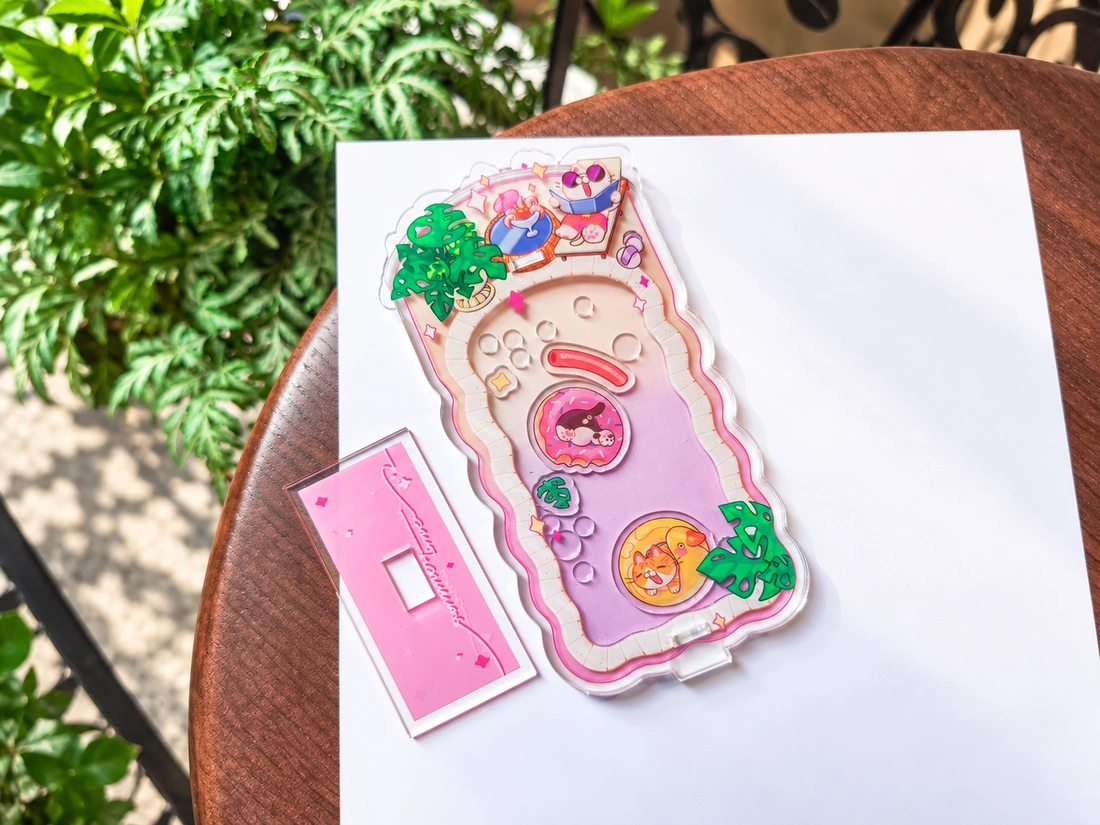
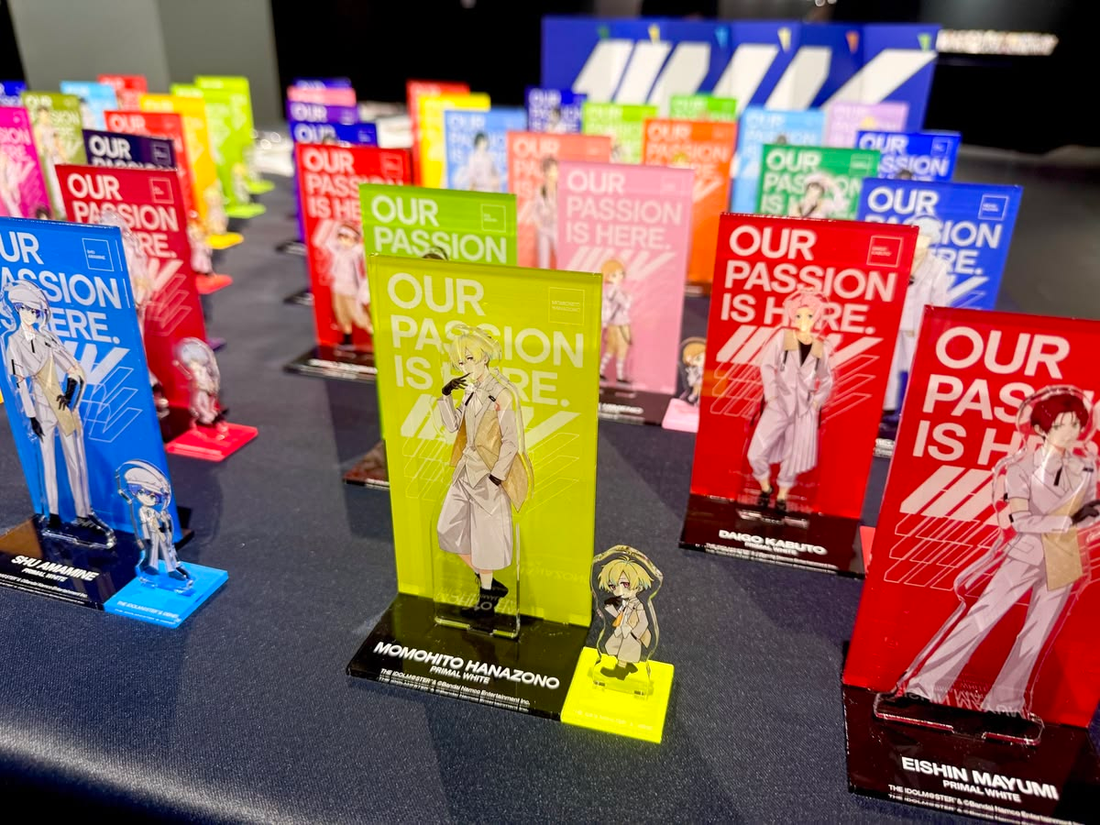
Shaker Acrylic Standees
Plan tabletop displays combining decorative artwork with movable inner pieces.
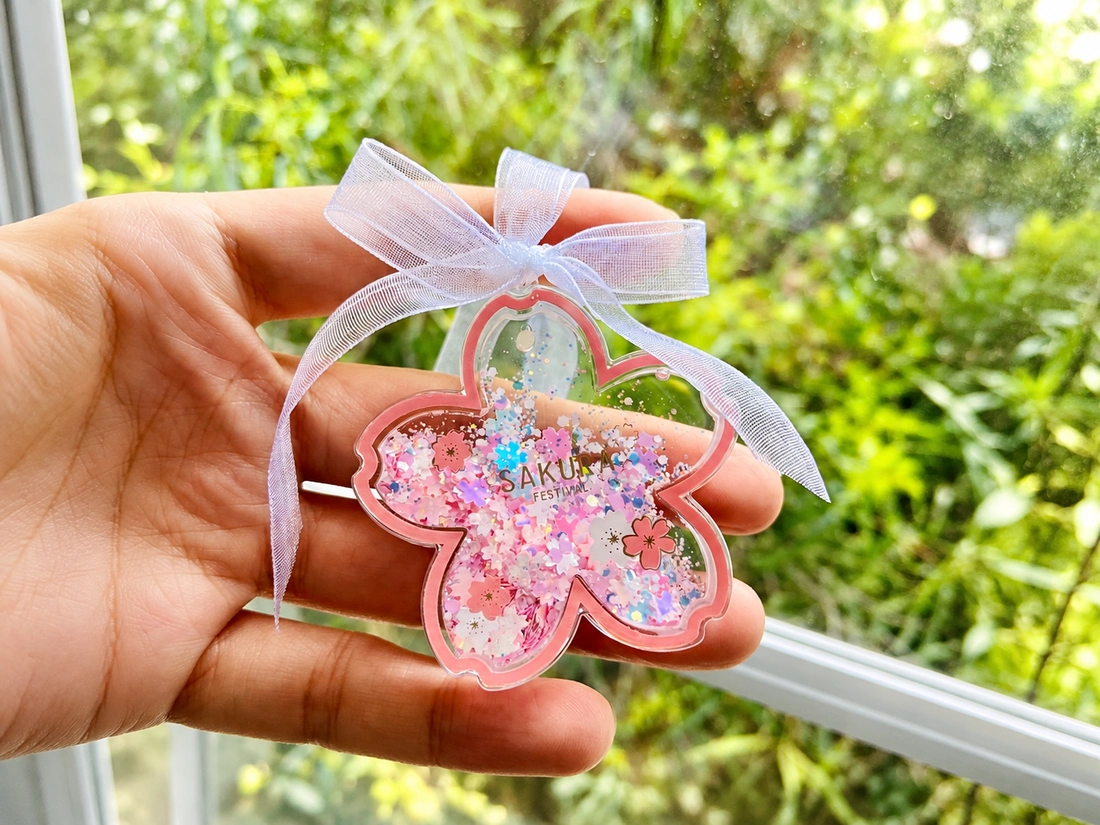
Shaker Hanging Ornaments
Consider hanging decorations with visible shaker chambers and themed inserts.
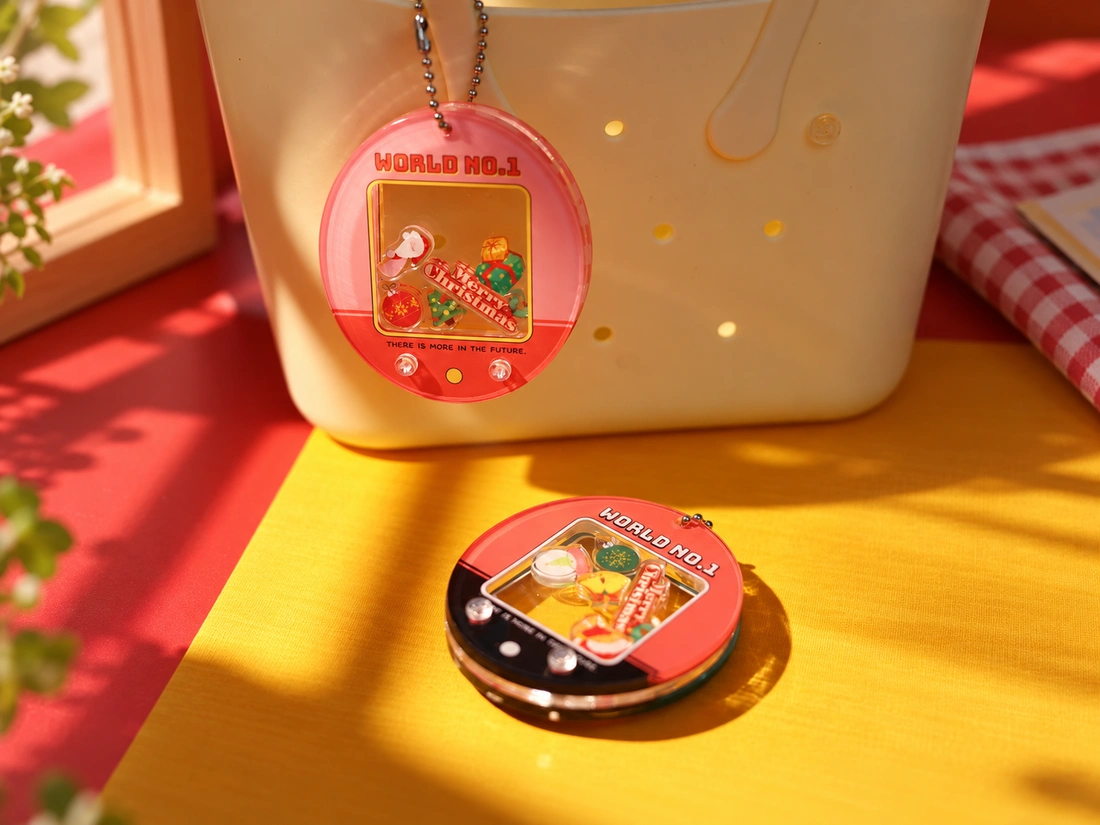
Multi-Insert Shaker Charms
Create coordinated designs with several movable pieces inside a defined cavity.
Customization & Specifications
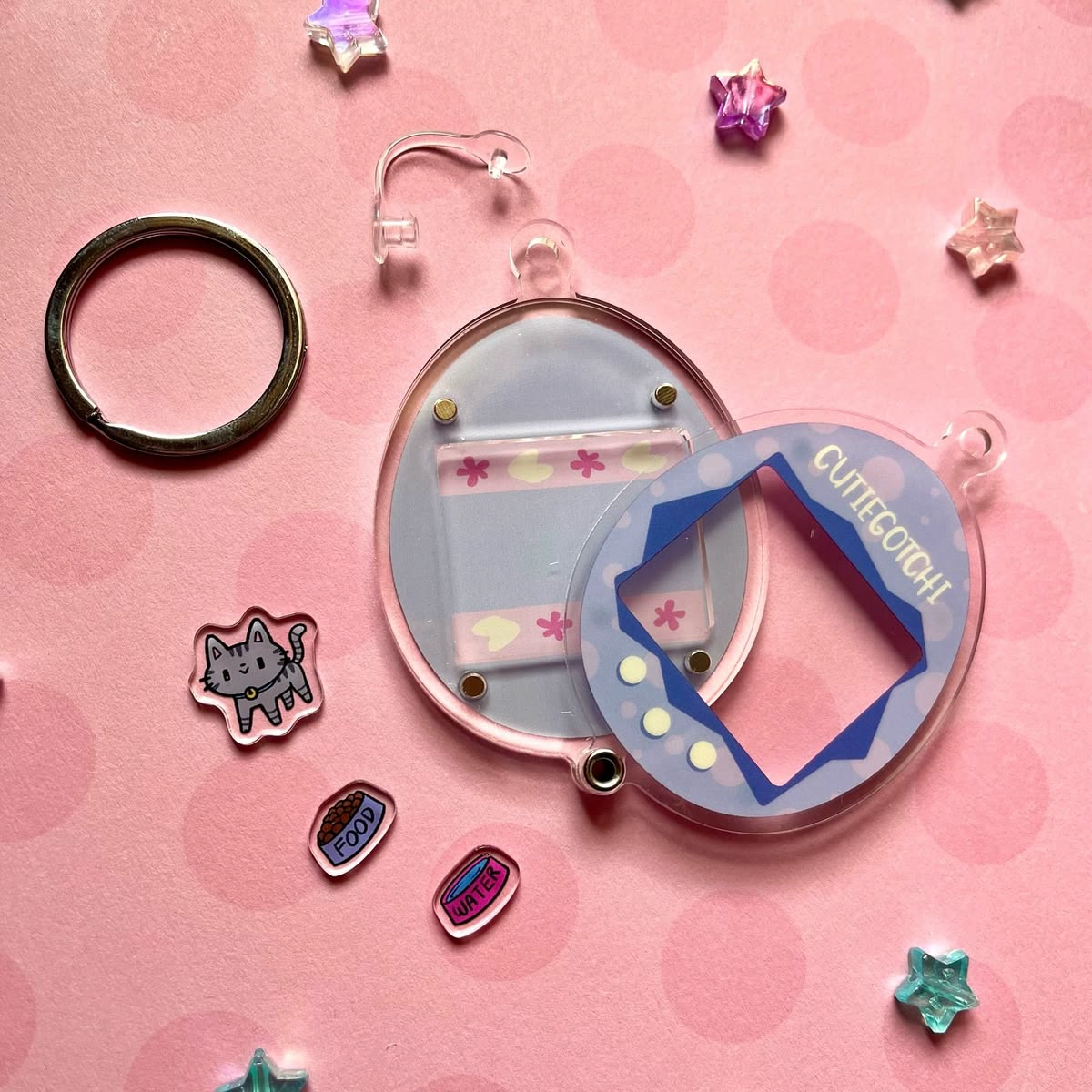
Artwork Layers & Moving InsertsPrepare shell artwork, viewing windows, and each movable insert.
A shaker product requires artwork for more than its outer silhouette. Provide the front and back graphics, the intended transparent viewing area, and a separate design for every moving insert. Background artwork and foreground decoration should be planned around the space through which the inserts can travel. White ink and print-layer orientation may affect visibility on transparent acrylic. Clearly identify the shell cut line, internal cavity boundary, insert shapes, and attachment-hole position so the artwork and structure can be reviewed together before sampling.
Cavity Size & Insert MovementReview chamber clearance, insert dimensions, and movement behavior.
The shaker chamber must provide suitable internal space for the intended movable pieces. Specify the number, shape, thickness, and approximate size of each insert, along with the desired movement and visible area. Oversized pieces, narrow passages, excessive insert quantities, or unsuitable internal surfaces may restrict movement or cause the pieces to collect in one area. The relationship between chamber depth and insert thickness is particularly important. A representative sample should be tilted and shaken under agreed conditions to assess the final behavior.
Layer Assembly & Edge ClosureEvaluate chamber construction, alignment, and containment of the inserts.
A typical dry shaker concept may use a transparent front panel, a cavity-forming middle frame, and a back panel. The actual construction and joining method depend on the selected materials and available manufacturing process. The assembly should keep the decorative inserts within the intended cavity while allowing their movement. Visible joints, gaps, adhesive marks, bubbles, and panel alignment may affect appearance and function. Closure reliability and any required handling or durability performance must be confirmed through the actual sample and appropriate evaluation.
Finished Size & AttachmentsCoordinate overall dimensions, thickness, hanging hardware, and display support.
Shaker construction can increase the finished thickness and weight compared with a conventional flat acrylic charm. Specify the overall width, height, intended edge appearance, and the preferred attachment or display format. Keychains require suitable hanging holes and hardware, while standees may need a separate base and stable support geometry. The attachment position should not compromise the chamber boundary or leave insufficient material around the hole. Final dimensions and assembly details should be checked using the selected construction.
Sampling, Quality & PackagingReview insert counts, shaker movement, assembly quality, and protective packing.
Sample review should include the printed artwork, finished dimensions, internal insert count, cavity appearance, and the movement of the decorative pieces when the product is tilted or shaken. Check for pieces becoming trapped, unexpected interference, visible assembly defects, and loose or damaged components. If specific drop, repeated-use, or closure-strength performance is required, the test method and acceptance criteria should be agreed separately. Packaging should protect the assembled surfaces, hanging hardware, and overall chamber structure while keeping different designs and SKUs correctly identified.
Applications
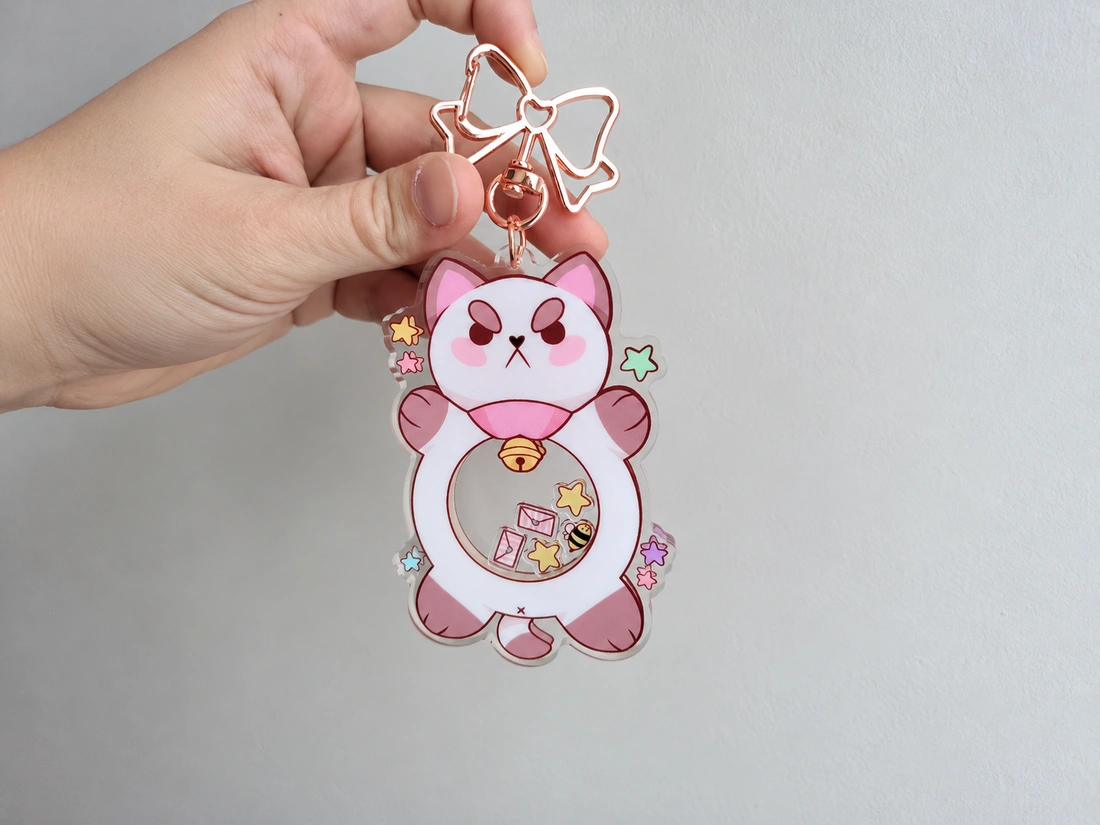
Character & IP Merchandise
Explore shaker merchandise using original or properly licensed character artwork.
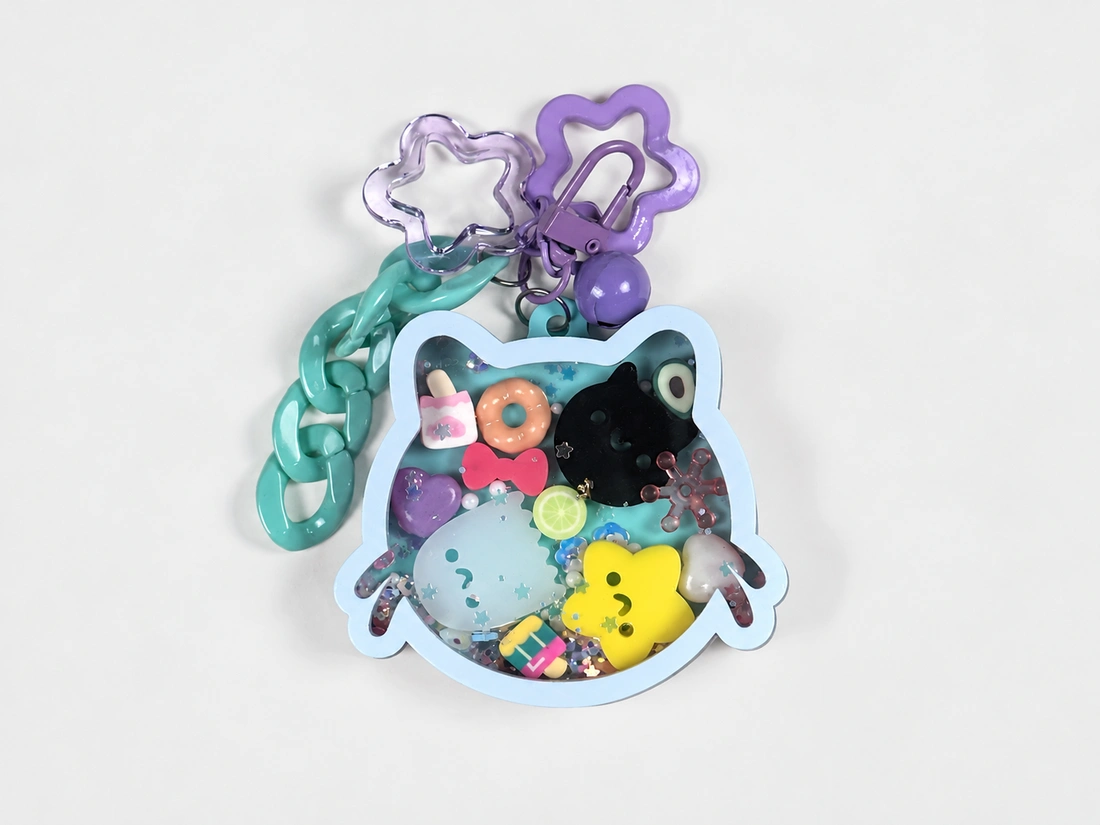
Artist & Creator Collections
Develop interactive acrylic charms around original illustrations and themed inserts.
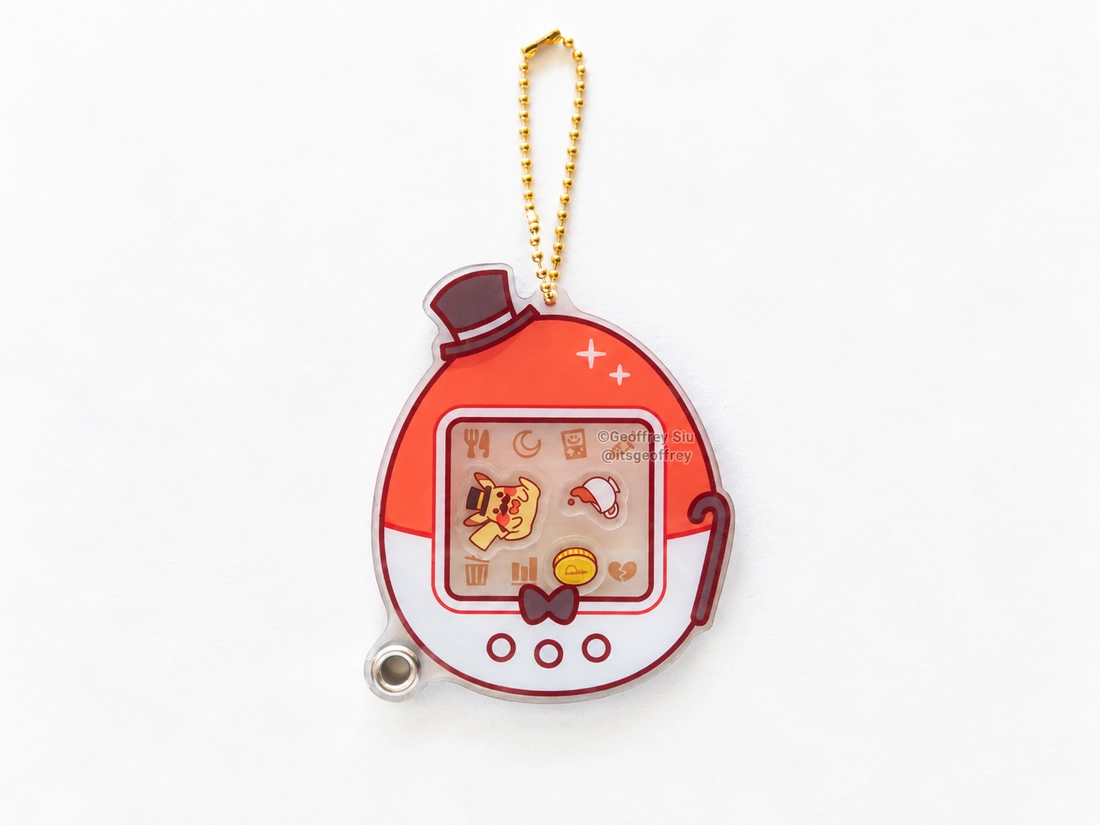
Pop-Up Shops & Events
Plan distinctive shaker merchandise for themed retail launches and events.
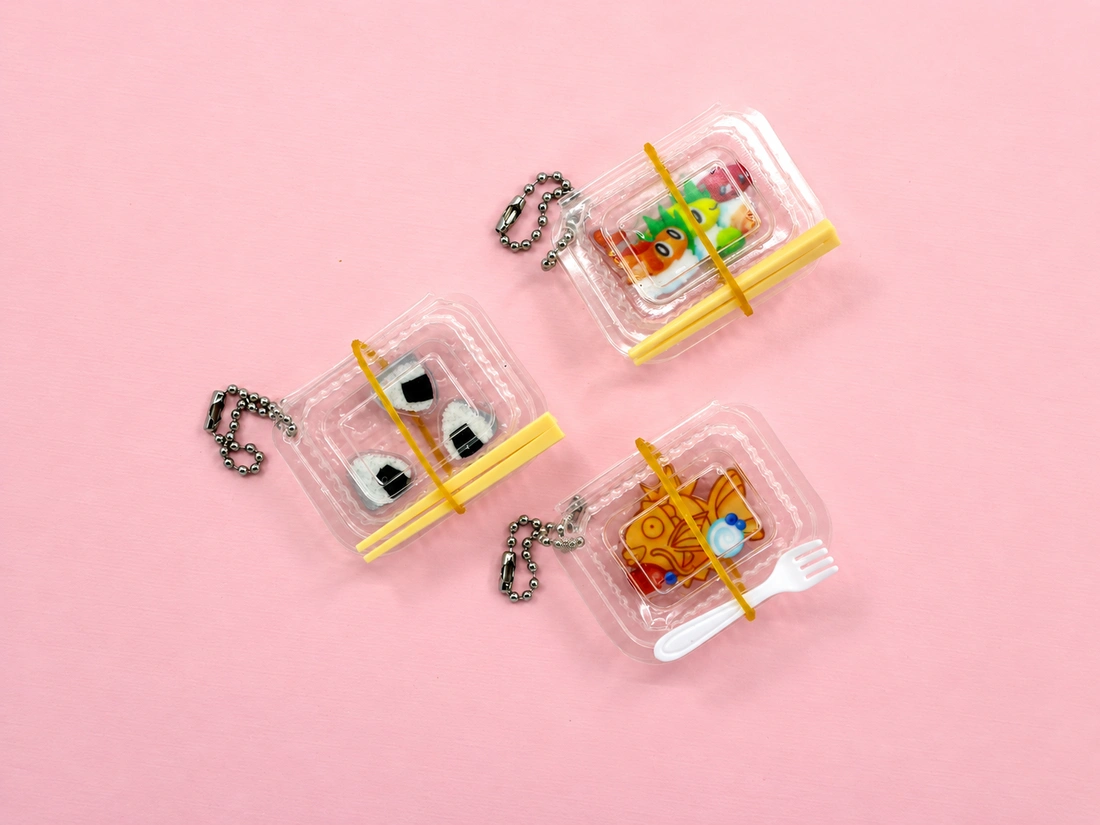
Private-Label Gift Collections
Coordinate shaker designs, accessory formats, and retail packaging for branded ranges.
Frequently Asked Questions
View All FAQsWhat is the difference between a shaker acrylic charm, a standard acrylic keychain, and a liquid-filled product?
A standard acrylic keychain normally uses a flat printed or decorative body without an internal moving chamber. A shaker acrylic charm contains loose decorative pieces that can move inside a defined cavity when the product is tilted or shaken. A liquid-filled product uses a liquid-containing construction with different sealing, material compatibility, and performance requirements. Some layered acrylic products also have visual depth but contain no movable pieces. These product types should be specified separately because their construction, sample checks, and manufacturing requirements differ.
What artwork files are needed for a custom shaker acrylic product?
A shaker design should identify the outer shell artwork, front and back graphics, the internal viewing window, and every movable insert. Separate cut lines may be needed for the external outline, chamber frame, and individual decorative pieces. White ink or other print layers should also be indicated where applicable. Provide the intended final dimensions, insert count, artwork orientation, and attachment position. The exact production file format and clearances depend on the manufacturing method, so the final layout should be reviewed before sampling.
What types of moving pieces can be considered inside a shaker acrylic charm?
Small printed acrylic shapes and other suitable decorative inserts can be evaluated according to the chamber construction. The intended pieces may include miniature characters, symbols, stars, or other themed designs. Their suitability depends on dimensions, thickness, edge condition, quantity, and compatibility with the surrounding materials. Glitter or very small decorative particles should not automatically be assumed to move freely in the same way as larger acrylic inserts. Provide a separate design and quantity for every proposed insert so the complete arrangement can be assessed.
How do chamber depth, insert size, and quantity affect shaker movement?
Movement depends on the space available inside the chamber relative to the size, thickness, shape, and number of loose pieces. Inserts that are too thick may not move through the available depth, while large or numerous pieces can overlap, obstruct one another, or collect in narrow areas. The viewing window and chamber outline also influence where the inserts can travel. A successful design requires more than visible interior space. The intended movement should be evaluated using representative physical inserts in the finished sample.
How is a dry shaker chamber assembled, and what should be checked around its edges?
A dry shaker may use front and back acrylic panels with an intermediate structure that defines the internal cavity. The actual joining and closure method depends on the selected materials and manufacturing process. The assembled chamber should retain the inserts while allowing the intended movement. Sample inspection should consider panel alignment, visible joints, gaps, unwanted adhesive marks, internal contamination, and the condition of the edges. A closed chamber should not automatically be described as waterproof, airtight, or guaranteed to remain permanently sealed.
Can shaker products have double-sided printing, transparent windows, and background artwork?
These effects can be considered when the artwork and construction are compatible. A transparent front window allows the moving pieces to be seen, while printed backgrounds and foreground details can create a layered visual composition. However, decoration placed in the wrong area may block the inserts or reduce the visibility of the movement. Double-sided printing also requires attention to text orientation, white ink, and show-through. Provide separate artwork references and define which areas must remain clear before approving the production layout.
Can a shaker acrylic design be used as a keychain, standee, or hanging ornament?
Different product formats can be evaluated, but they may require changes to the overall construction. A keychain needs a suitable attachment hole and hardware, while a standee requires stable support or a compatible base. A hanging ornament also needs an appropriate connection point and intended hanging orientation. The chamber position, total thickness, weight, and material remaining around the attachment area should be reviewed for each format. One artwork design should not automatically be treated as suitable for every attachment or display arrangement.
Can a shaker acrylic product be opened to replace the moving pieces?
Some shaker concepts use closed chambers, while other designs may be developed with an opening or removable component. These are different constructions and should not be treated as interchangeable. An openable design requires additional attention to closure security, component fit, handling, and the possibility of small inserts becoming accessible. A conventional closed shaker should not be described as refillable or user-serviceable. If removable inserts are required, state that requirement at the design stage and confirm whether an appropriate construction is actually available.
What should be checked on a shaker acrylic sample before bulk production?
Sample approval should cover finished dimensions, shell artwork, cut contours, viewing-window clarity, insert count, print alignment, and the appearance of the assembled layers. The completed product should be tilted and shaken under agreed conditions to check whether the pieces move as intended, become trapped, or obscure important artwork. Inspect the chamber for visible defects, gaps, internal debris, and loose components. If the product includes hanging hardware or a display base, review that assembly as well. Required durability or safety tests should be agreed separately.
What affects MOQ, pricing, sampling, and production time for custom shaker acrylic products?
MOQ and pricing depend on the finished dimensions, cavity construction, number and complexity of moving inserts, printing, assembly method, attachment hardware, order quantity, and packaging. Different internal layouts or product formats may require separate sample development and production setup. For a quotation, provide the shell design, front and back artwork, internal cavity reference, individual insert artwork and quantities, preferred accessory format, order quantity per SKU, packaging, destination, and target date. Manufacturing feasibility, sampling costs, MOQ, and production timing should be confirmed for the selected structure.
Ready to Start Your Display Project?
Share your product, dimensions and quantity to discuss the next step.