

Custom Acrylic
Coasters
Custom acrylic coasters for hospitality brands, character merchandise, promotions, and retail gift collections. Explore printed artwork, custom shapes, clear and colored materials, and coordinated coaster sets, with drinkware fit, surface details, and packaging reviewed for each project.
Product Types
View All Acrylic Displays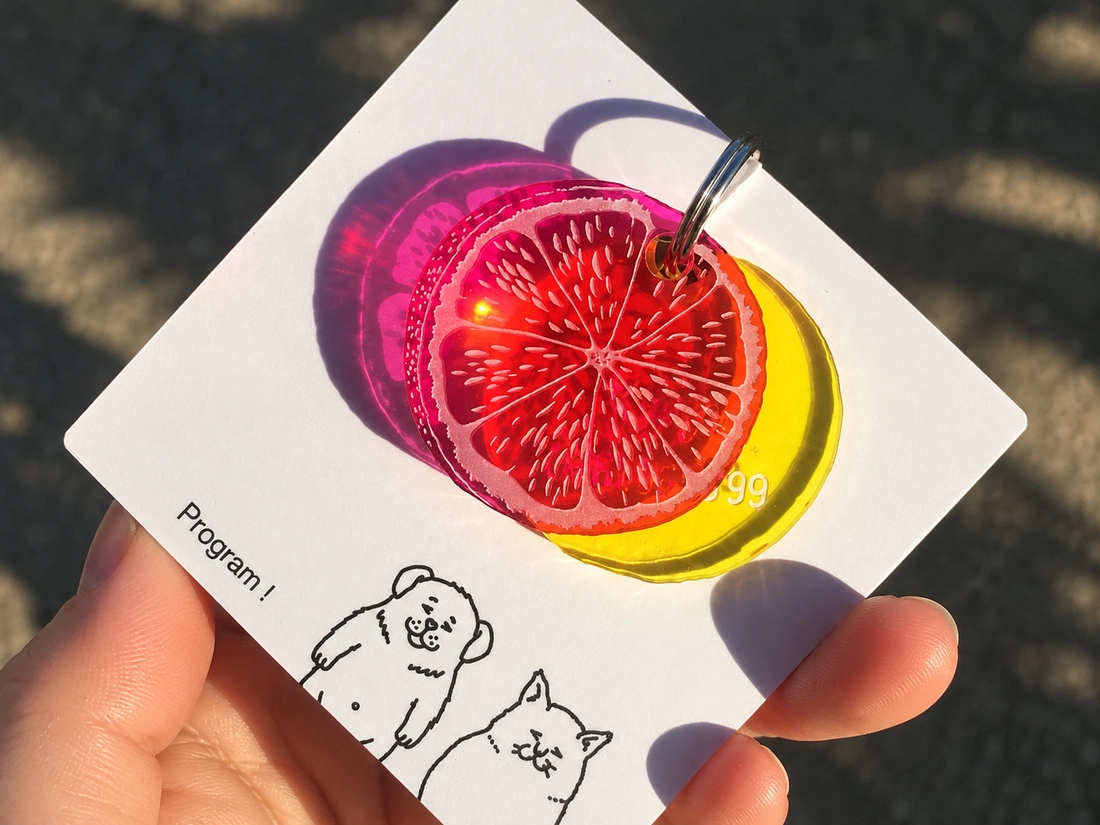
Printed Acrylic Coasters
Feature custom logos, illustrations, and full-color artwork on acrylic coaster designs.

Custom-Shaped Acrylic Coasters
Explore round, square, and artwork-specific outlines for branded coaster collections.

Clear & Colored Acrylic Coasters
Review transparent, tinted, and opaque appearances to match your visual identity.
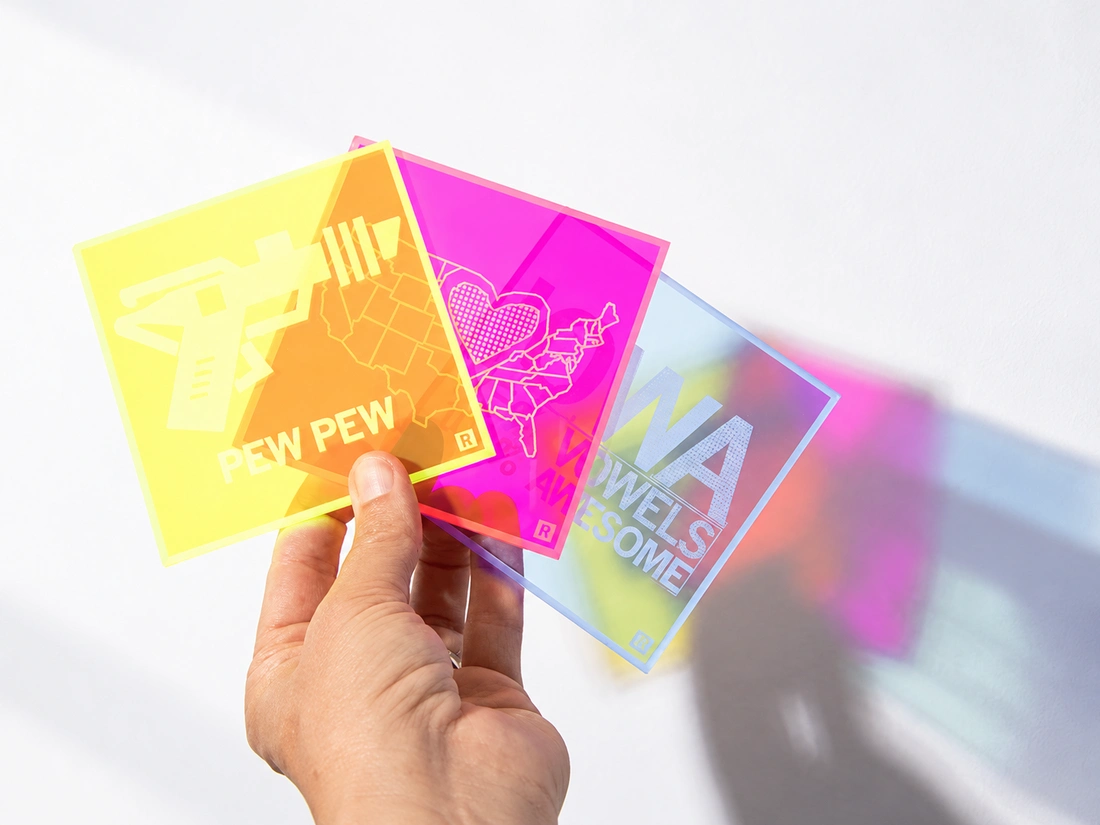
Branded Acrylic Coaster Sets
Coordinate multiple coaster designs with defined quantities and retail packaging.
Customization & Specifications
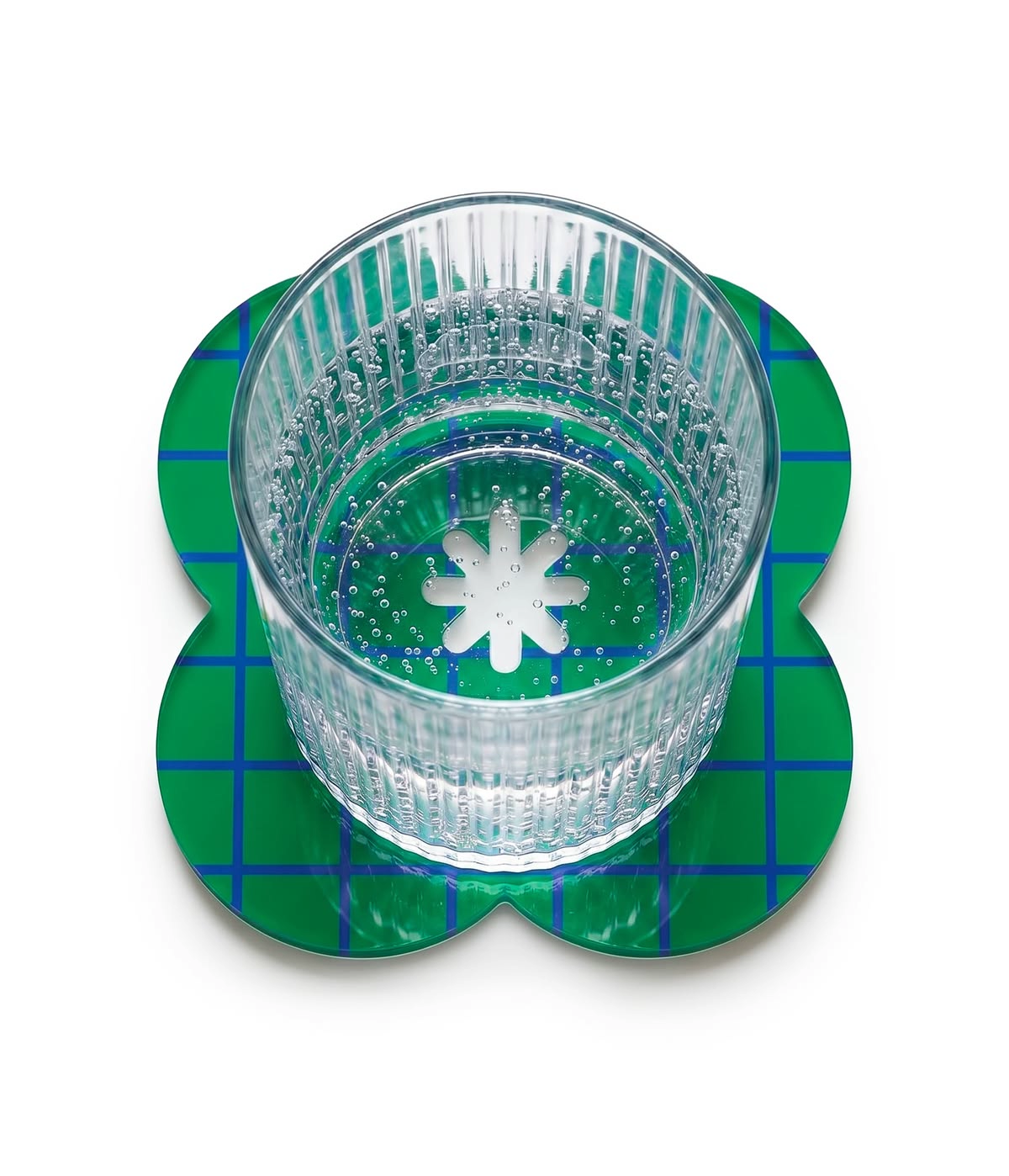
Artwork & Print PlacementPlan logos, full-color artwork, white ink, and print-side placement.
Acrylic coaster artwork should identify the visible design, intended transparent areas, and any white backing needed for the selected printing method. Graphics may be considered on the front or reverse side, depending on the desired appearance and construction. Reverse-side printing can create a different viewing effect through clear material, but its suitability depends on the selected process and exposure conditions. Provide editable artwork, color references, and the intended viewing direction so the final print layers can be reviewed before sample approval.
Shape, Size & Drinkware FitDefine the coaster outline and usable surface for your intended drinkware.
The finished coaster should be sized around the intended cups, glasses, or other drinkware rather than its decorative artwork alone. Provide the approximate drinkware base diameter or footprint, preferred coaster dimensions, and any requirements for surface coverage. Round, square, and custom-cut silhouettes may offer different usable contact areas. Narrow projections, deep cutouts, or irregular edges should be assessed for stability and handling. The final outline and finished dimensions should be reviewed with representative drinkware before approval.
Acrylic Material & Edge FinishReview thickness, color, surface appearance, and comfortable edge details.
Clear, tinted, or opaque acrylic may be considered according to the proposed product design and material availability. Thickness influences the coaster's edge profile, weight, appearance, and handling, but it should not be treated as a universal measure of heat resistance or durability. Exposed edges and corners should be finished for the intended use, while the main contact surface should be reviewed for smoothness and practical handling. Confirm the selected material and finishing method through project specifications and sample inspection.
Grip, Contact & CondensationEvaluate underside contact, optional grip features, and moisture behavior.
Acrylic is a non-absorbent material, so condensation from cold drinkware may remain on the coaster surface instead of being absorbed. Moisture between a smooth glass base and the coaster can also affect how the two surfaces separate. Separately, the coaster's underside may slide on certain tabletops depending on the material and contact conditions. Optional feet or other compatible backing details can be evaluated where needed. Both the upper drinkware contact and lower tabletop contact should be checked using representative samples.
Use, Care & Retail PackagingReview drinkware conditions, cleaning guidance, coaster sets, and protective packing.
The intended use should identify whether the coasters will mainly support cold drinks, warm cups, or another defined drinkware condition. Acrylic material, printing, attached accessories, and surface treatments may have different temperature and cleaning limitations. Any care instructions should therefore be based on the complete product construction. For retail or wholesale orders, specify the number of coasters per set, artwork versions, individual protection, backing cards, labels, and box requirements. Packaging should limit surface contact and protect the finished edges during shipment.
Applications
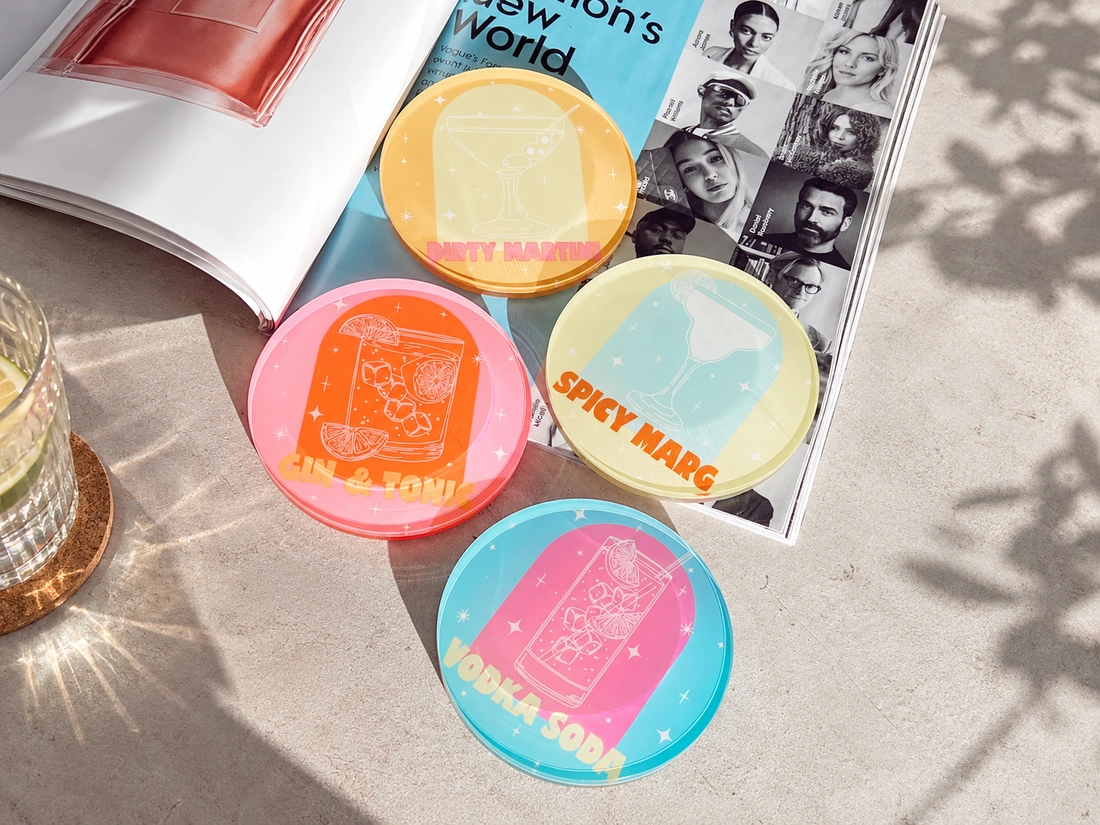
Cafés & Hospitality Brands
Explore branded coaster designs for cafés, beverage concepts, and hospitality settings.
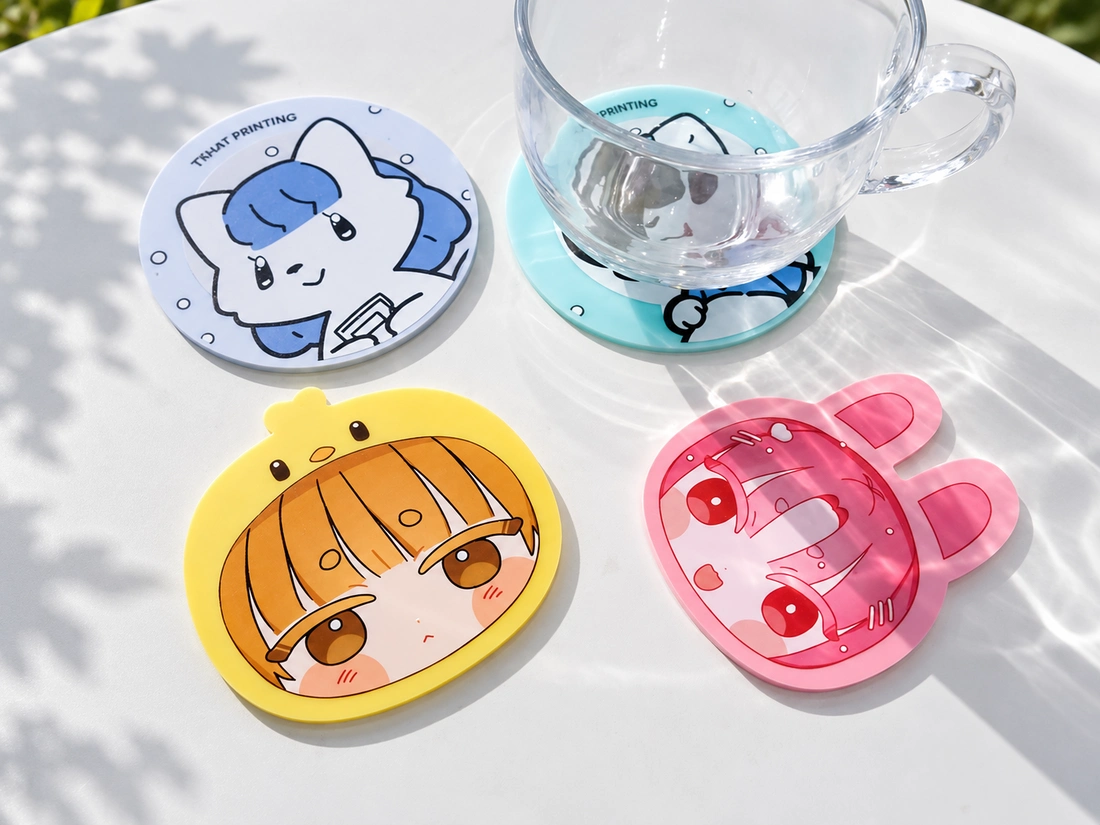
Character & IP Merchandise
Create original or properly licensed character coaster collections for merchandise retail.
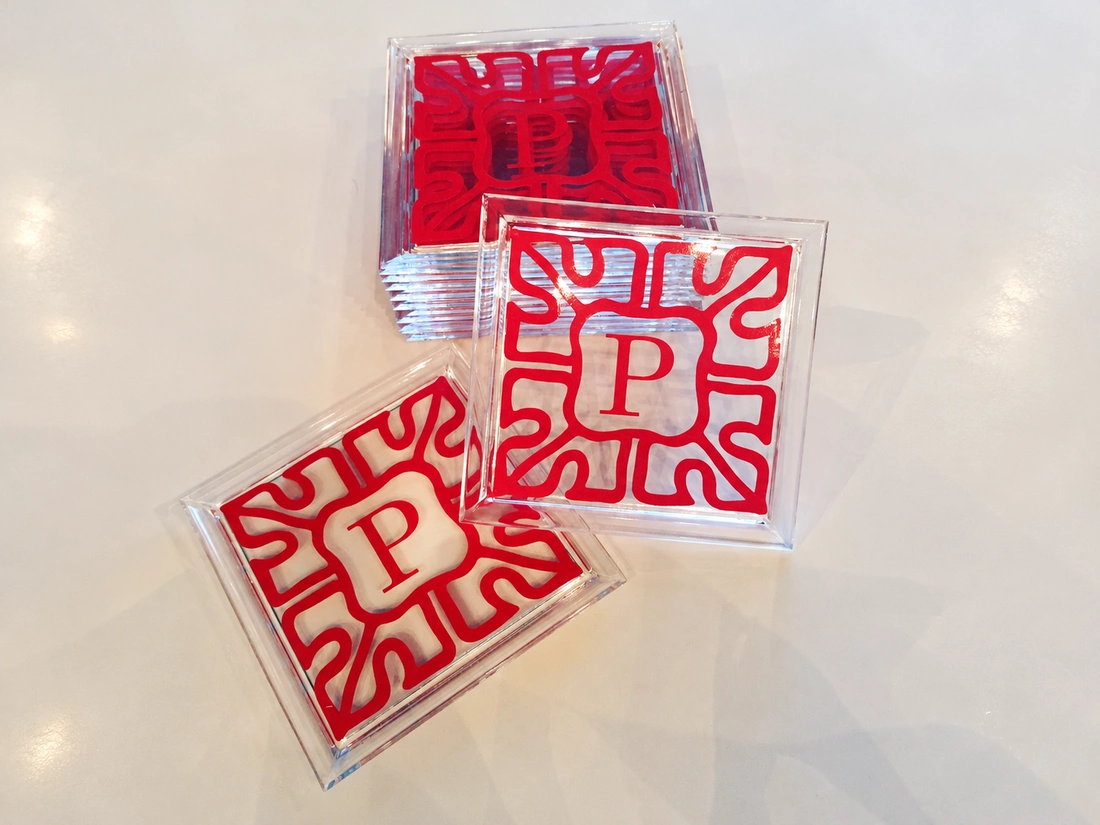
Corporate Promotions & Events
Plan custom logo coasters and themed sets for campaigns, events, and branded gifts.
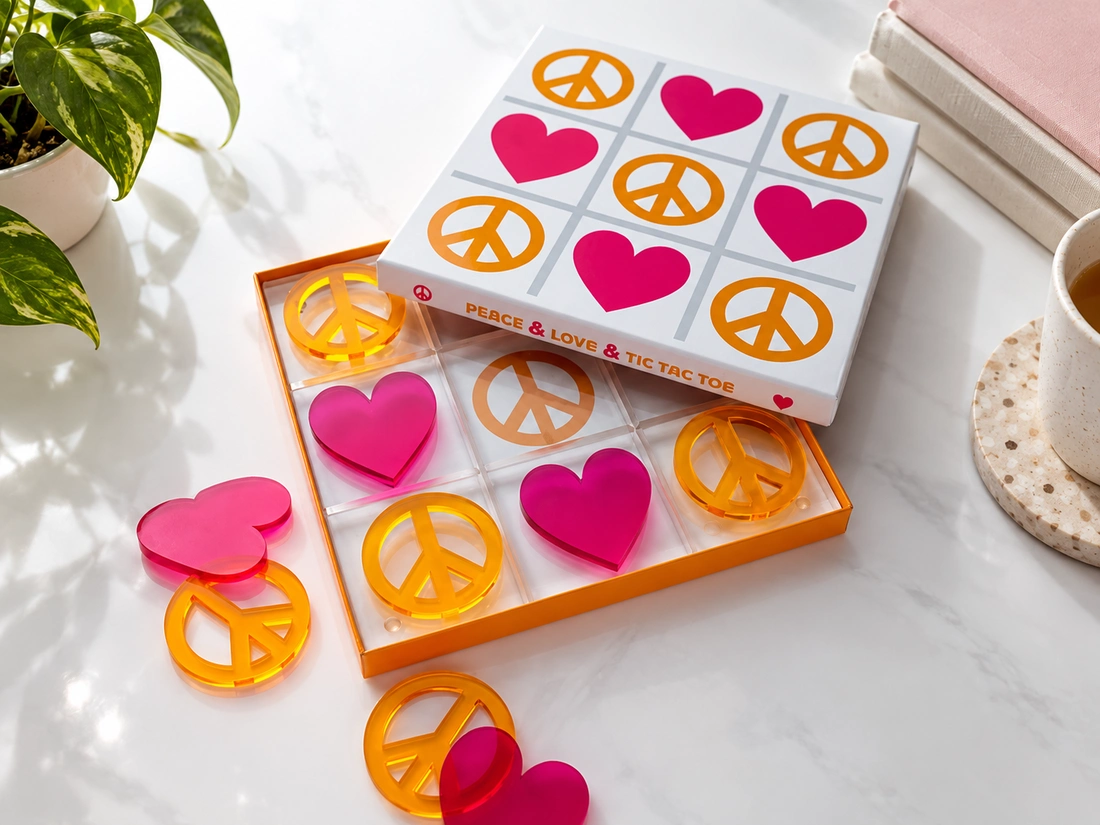
Retail & Lifestyle Gift Collections
Develop coordinated coaster artwork and retail packs for home and gift assortments.
Frequently Asked Questions
View All FAQsHow are acrylic coasters different from paper, cork, or absorbent drink coasters?
Acrylic coasters offer a rigid, non-absorbent surface that can be customized with printed artwork, colors, and cut shapes. Unlike paper or absorbent cork products, acrylic does not soak up condensation from a cold glass. Moisture may remain on its surface and should be wiped away as appropriate. These material differences affect how the coaster feels, how it is cleaned, and its suitability for particular drinkware. Choose the construction according to the desired appearance, intended use, and expected moisture conditions rather than assuming all coaster materials perform alike.
How do I choose the right size and shape for a custom acrylic coaster?
The coaster should provide a practical contact area for the intended drinkware. Start with the diameter or footprint of the cups and glasses that will be used, together with the preferred finished coaster dimensions. Round and square outlines are common design directions, while custom shapes can reflect logos or character artwork. Deep cutouts, narrow projections, or irregular contact areas may reduce stability or complicate handling. Provide a drinkware reference and the intended design so the final shape can be evaluated through a representative sample.
What is the difference between front printing and reverse printing on acrylic coasters?
Front printing places the artwork on the viewing surface, while reverse printing places the design on the opposite side so it is seen through the acrylic. These arrangements can create different visual effects and expose the printed areas to different contact conditions. White ink may be used to control opacity and color appearance where supported by the selected printing process. Reverse artwork may also require suitable orientation adjustments, particularly when text is included. The final print layers and cleaning requirements should be confirmed for the proposed construction.
Can custom acrylic coasters be used with hot coffee cups or other warm drinkware?
Suitability depends on the actual acrylic grade, contact temperature, duration of exposure, printing construction, and any attached backing materials. A coaster intended for an ordinary beverage cup should not automatically be treated as a heat-resistant mat for cookware or extremely hot containers. Different acrylic products can have different recommended service temperatures, and printed or assembled components may introduce additional restrictions. If hot drinks are part of the intended use, specify the expected conditions and evaluate a representative finished sample before making heat-resistance claims.
How does condensation affect acrylic coasters, and can a wet glass stick to the surface?
Acrylic does not absorb water in the way that paper or cork coasters do, so condensation from a cold drink may accumulate on the surface. With smooth, wet contact areas, a glass may temporarily adhere to the coaster when lifted. The actual behavior depends on the cup base, surface finish, moisture, and use conditions. If reducing this effect is important, identify it as a specific design requirement and review suitable surface approaches with the supplier. A standard smooth acrylic coaster should not be advertised as condensation-absorbing or guaranteed non-stick.
Can custom acrylic coasters have non-slip pads or protective feet underneath?
Optional pads, feet, or compatible backing details can be evaluated to affect the contact between the coaster and the table. Their suitability depends on the acrylic dimensions, backing material, attachment method, and expected surfaces. These features are separate from the contact between the drinkware and the upper coaster surface. A non-slip underside does not automatically prevent a wet glass from sticking to the top. If grip or furniture-contact protection is important, define the intended tabletop and review the assembled sample under representative conditions.
What acrylic materials, thicknesses, and edge finishes can be considered for coasters?
Clear, tinted, and opaque acrylic can create different visual appearances, subject to material availability and the proposed manufacturing method. Thickness influences the finished weight, edge profile, and handling but does not by itself establish resistance to heat, scratches, or impact. Edge geometry and corner finishing should suit the coaster outline and intended use. Provide your preferred dimensions, material appearance, artwork, and any reference products. Actual material specifications and processing requirements should be confirmed before sample approval.
How should printed acrylic coasters be cleaned and cared for?
Cleaning guidance depends on the acrylic grade, printing method, exposed surfaces, and any adhesive-backed feet or decorative details. Gentle cleaning with a soft cloth and a suitable mild cleaning solution may be appropriate for some acrylic constructions, but aggressive solvents, abrasive pads, and excessive heat can damage certain materials or prints. Do not assume that the finished coaster is dishwasher-safe or compatible with every disinfectant. Retail care instructions should be based on the actual materials and the supplier's approved cleaning recommendations.
What should be checked on an acrylic coaster sample before bulk production?
Sample approval should cover the finished dimensions, cut outline, edge quality, print colors, artwork alignment, transparency, and overall surface appearance. Test the coaster with representative drinkware to review the contact area, stability, and handling. If cold drinks or warm cups are expected, consider condensation behavior, contact temperature, and any relevant use conditions. Optional backing pads should be checked for position and attachment. Confirm the proposed packaging, set contents, and SKU identification, and record the approved specifications before bulk manufacturing.
What affects MOQ, pricing, artwork preparation, and packaging for custom acrylic coasters?
MOQ and pricing depend on the coaster dimensions, acrylic material, cut shape, printing construction, number of artwork versions, optional backing details, and packaging requirements. A collection with several colors or designs may require separate setup and quantities for each SKU. For a quotation, provide the intended size and shape, artwork, material references, quantity per design, number of coasters per retail set, packaging preferences, destination, and target date. Sampling, production timing, pricing, and shipping can then be reviewed against the approved project requirements.
Ready to Start Your Display Project?
Share your product, dimensions and quantity to discuss the next step.