
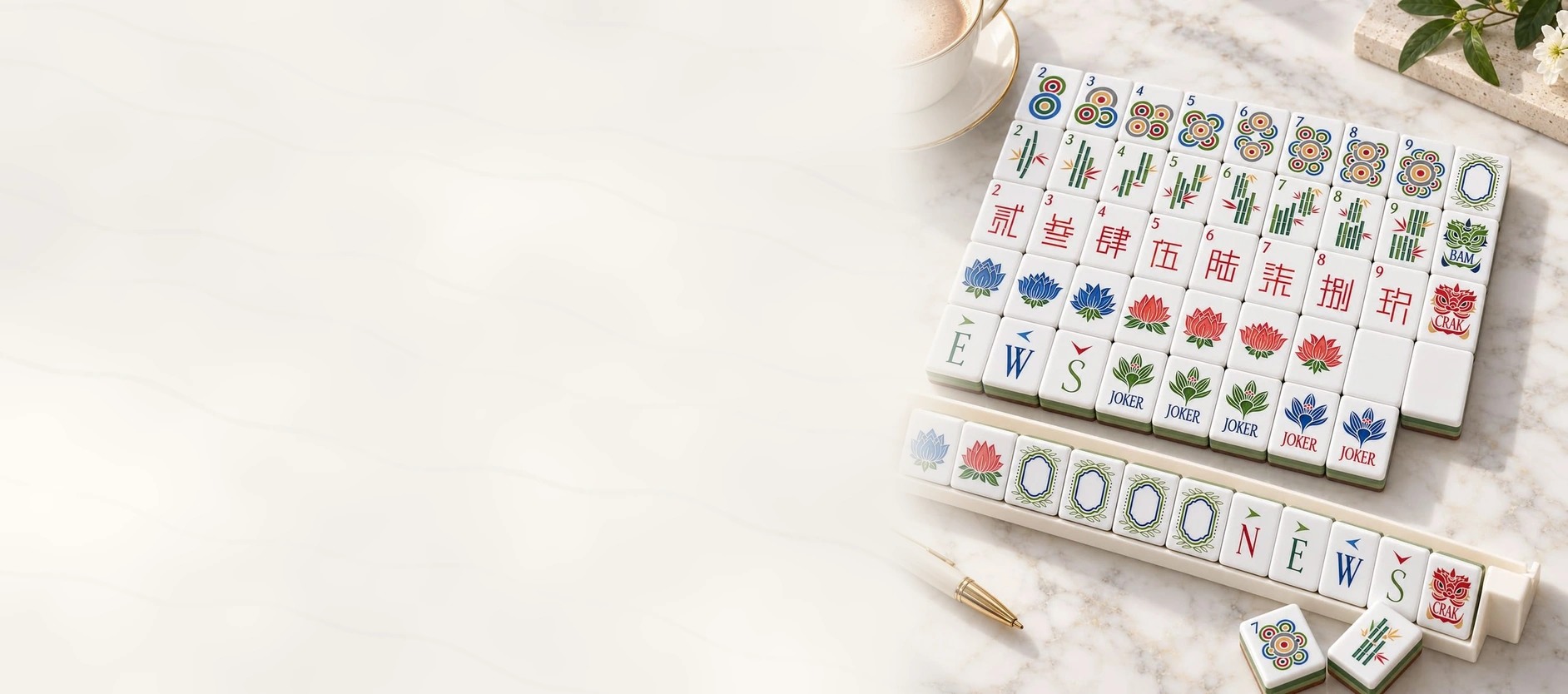
Specialty Finish
Acrylic Mahjong
Tiles
Explore distinctive finishes for custom American acrylic mahjong tiles, from pearlescent and shimmering looks to gradient colors, patterned backs, and reflective details. Define the visual effect, tile specifications, and sample requirements for your branded collection.
Product Types
View All Acrylic Displays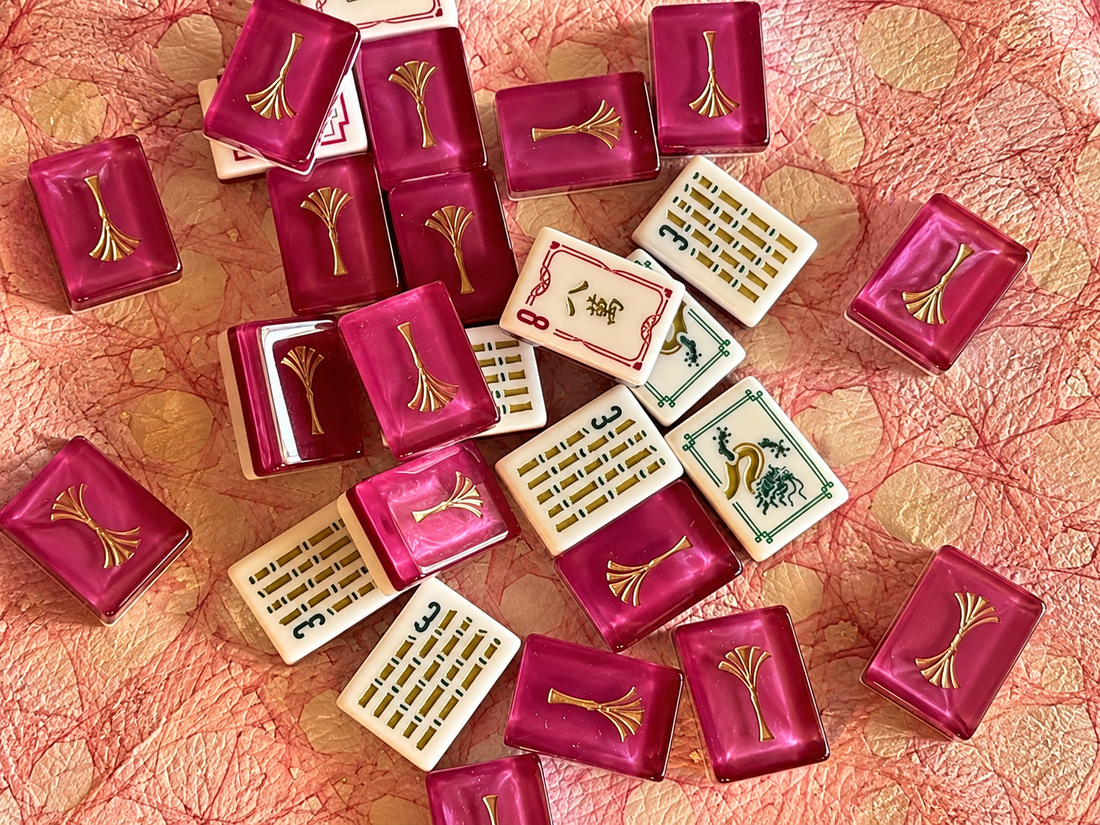
Pearlescent & Shimmer Effects
Review pearl-like luster and subtle color shifts for distinctive tile finishes.
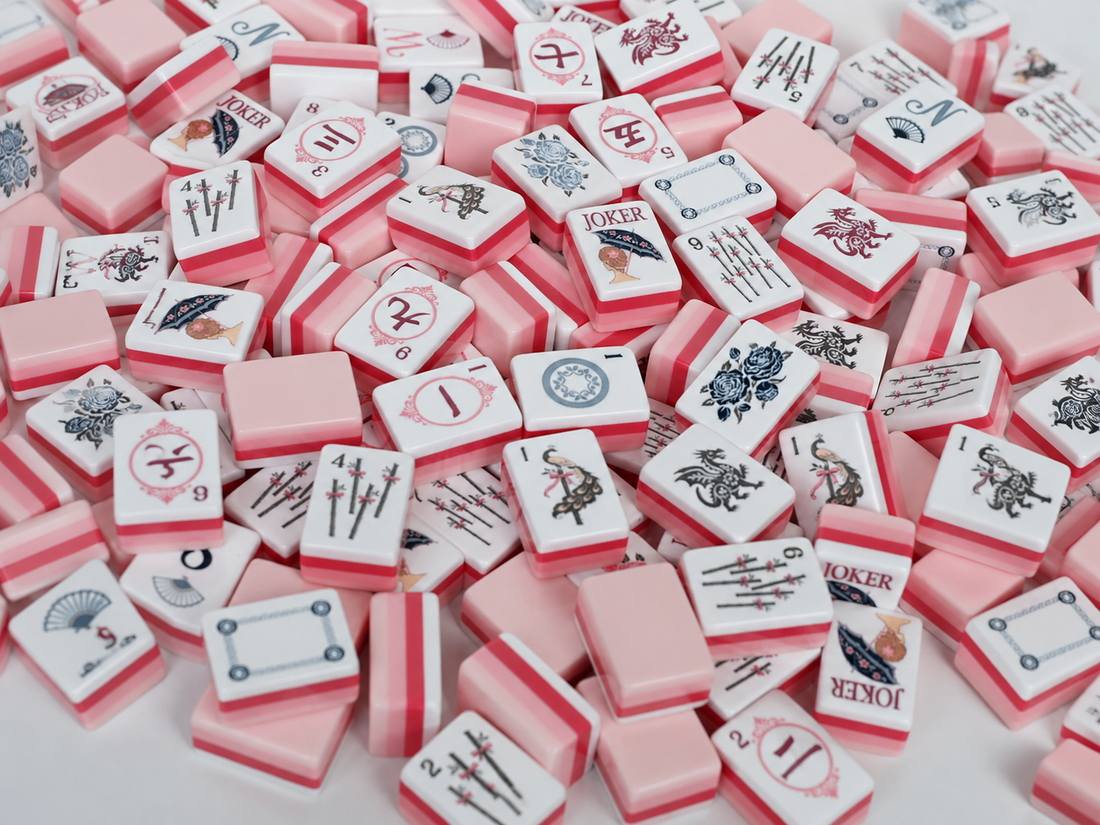
Gradient & Ombre Designs
Explore smooth color transitions and coordinated gradient artwork for tile collections.
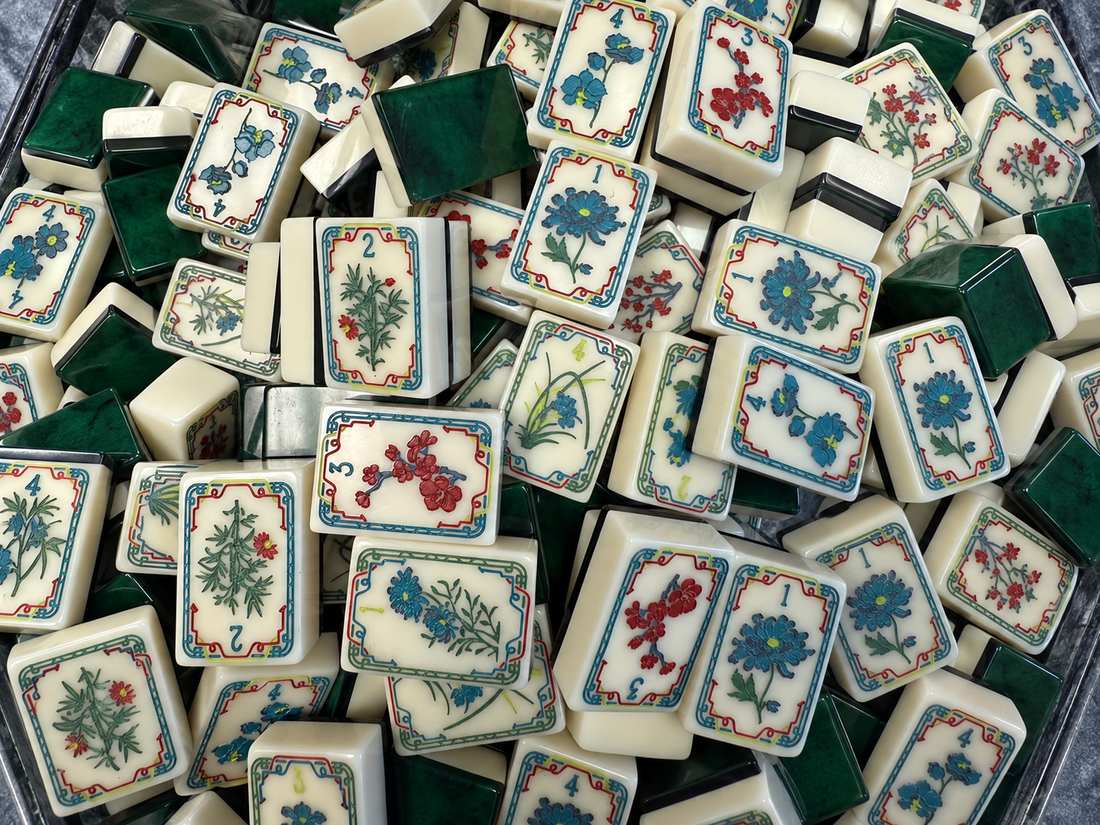
Patterned & Textured-Look Backs
Plan decorative tile backs with coordinated patterns and texture-inspired graphics.
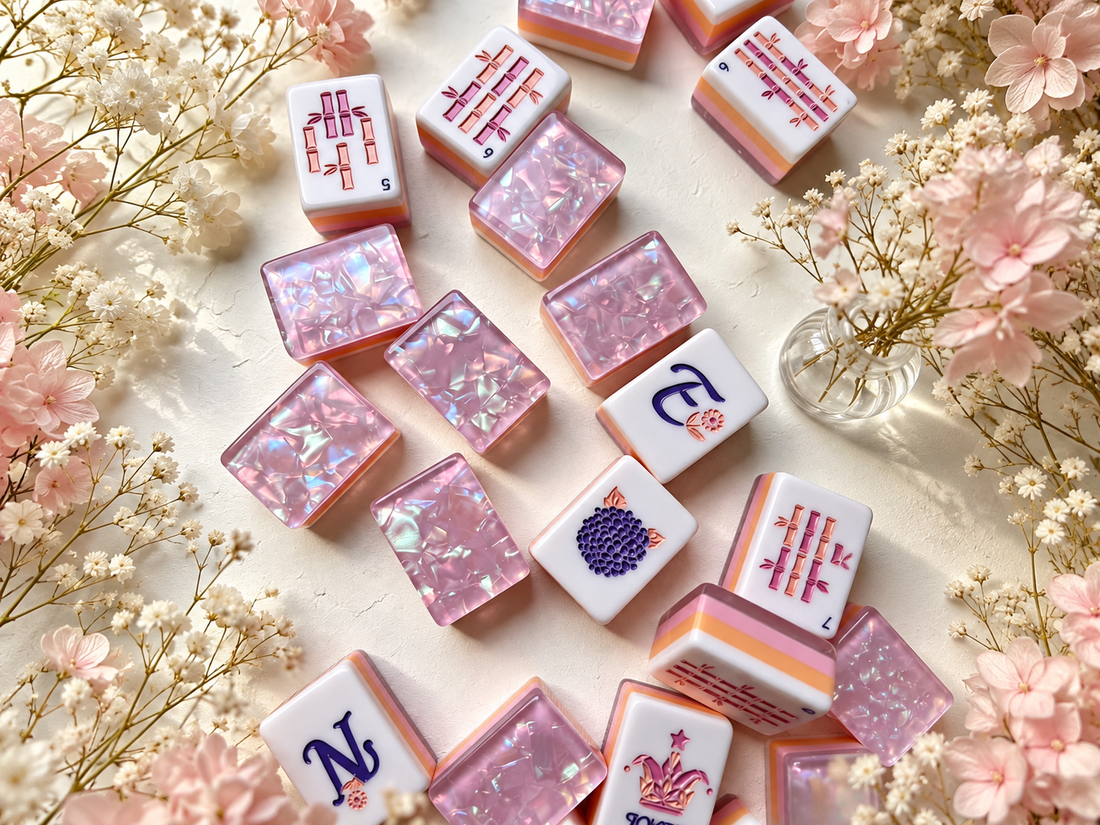
Glitter & Reflective Accents
Consider sparkle, glitter, and reflective-looking details for selected visual effects.
Customization & Specifications
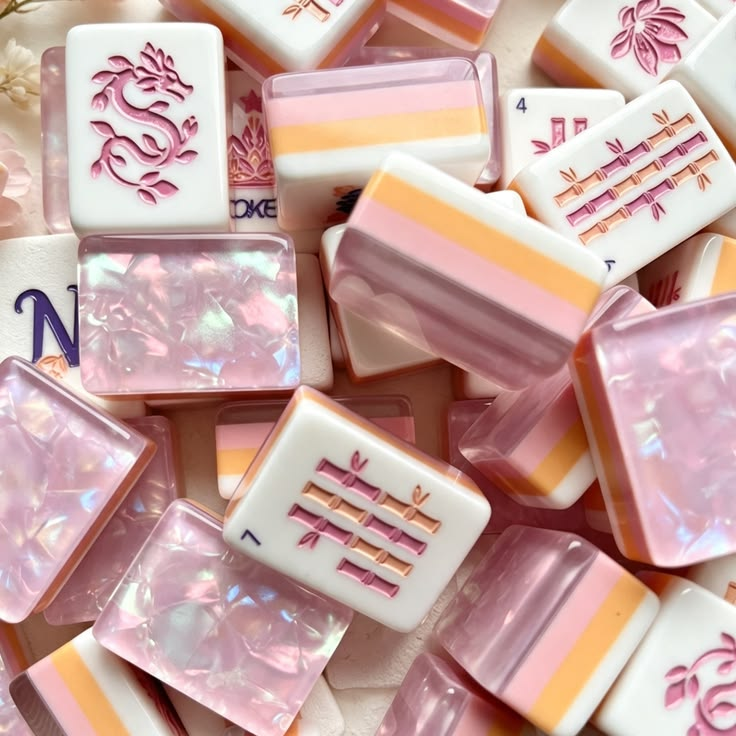
Finish Appearance & Material MethodReview the desired visual effect and suitable material approach.
A specialty appearance can come from the acrylic material itself, a printed design, a decorative layer, or another suitable finishing method. These approaches may produce different results in terms of color, texture, reflectivity, and surface behavior. Provide close-up references showing the finish you want, including views under different lighting where possible. The actual material and manufacturing method should be assessed before the appearance is treated as an approved production specification.
Colors, Gradients & ConsistencyDefine colors, transitions, and acceptable visual variation.
Color references should describe more than the general shade. For pearlescent or shimmering looks, specify the desired luster and viewing effect. For gradients, identify the starting colors, transition direction, and where the effect should appear on each tile. Some decorative materials may show natural or process-related variation, so acceptable differences need to be defined. Physical samples under agreed lighting are useful for establishing the intended appearance before bulk production.
Tile Backs, Patterns & OpacityPlan coordinated backs while protecting normal gameplay.
Tile backs should remain consistent enough that individual tiles cannot be identified by unintended marks, patterns, or visual differences. Specify the desired back color, pattern orientation, artwork position, and opacity requirements. If the tile construction is transparent or translucent, check whether face artwork can be seen through the back under relevant lighting. Decorative textures must also be reviewed for their effect on handling and recognizability. These requirements should be checked across representative tiles rather than on a single sample.
Artwork, Tile Dimensions & HandlingCoordinate decorative effects with tile artwork and finished size.
Special finishes should not interfere with the readability of the numbered suits, Winds, Dragons, Jokers, and Flowers. Provide approved tile-face artwork, color references, and the intended dimensions. The finishing method may affect surface appearance, edge treatment, or the overall construction, which should be considered when checking handling feel and compatibility with racks or storage cases. The final design should preserve the intended gameplay function as well as its decorative appearance.
Sample Approval, Durability & PackingReview finish quality, surface behavior, and complete-set packaging.
Specialty finishes should be evaluated on representative physical tiles before bulk production. Relevant checks may include color appearance, gradient placement, pattern alignment, back consistency, surface defects, and the behavior of decorative elements during normal handling. Depending on the selected process, adhesion, abrasion, or cleaning compatibility may also require review. The full tile inventory, artwork versions, colorways, and packaging should be approved together. Protective packing should account for the final surfaces and contact between tiles.
Applications

Boutique Mahjong Collections
Explore distinctive finish directions for design-led American mahjong brands.
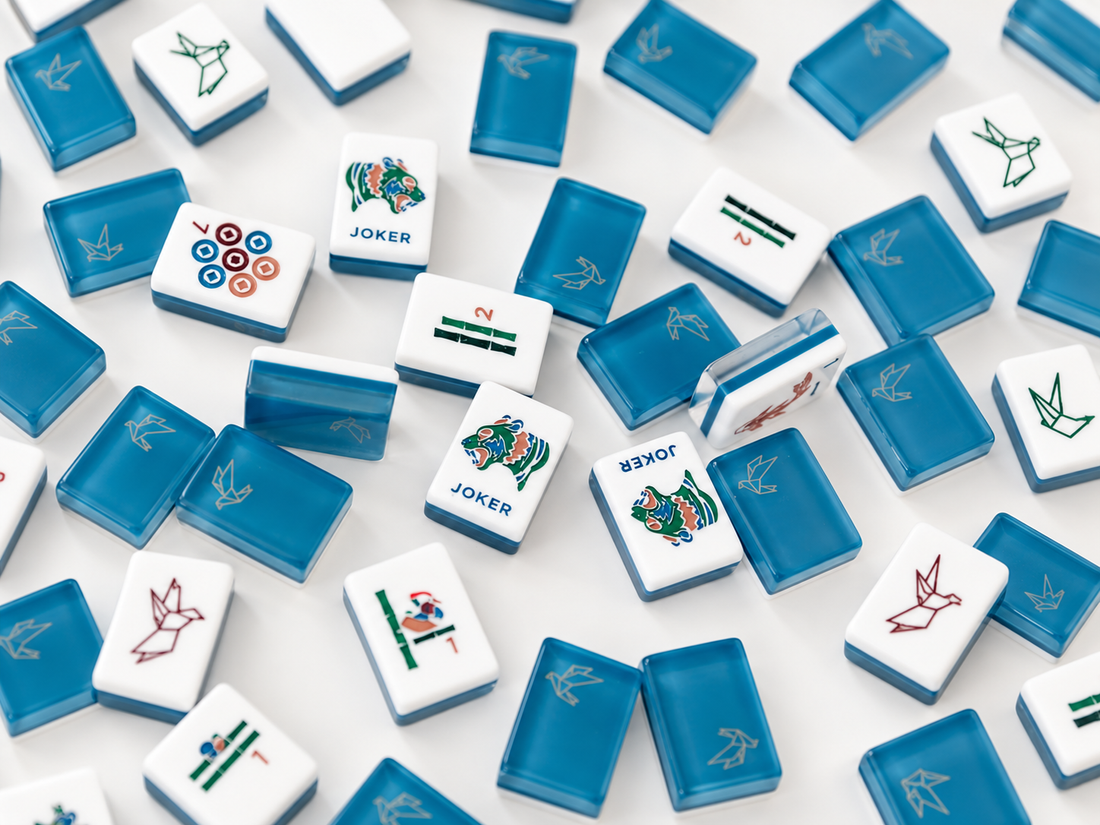
Limited-Edition Colorways
Plan selected gradient, shimmer, or patterned-back themes for special collections.
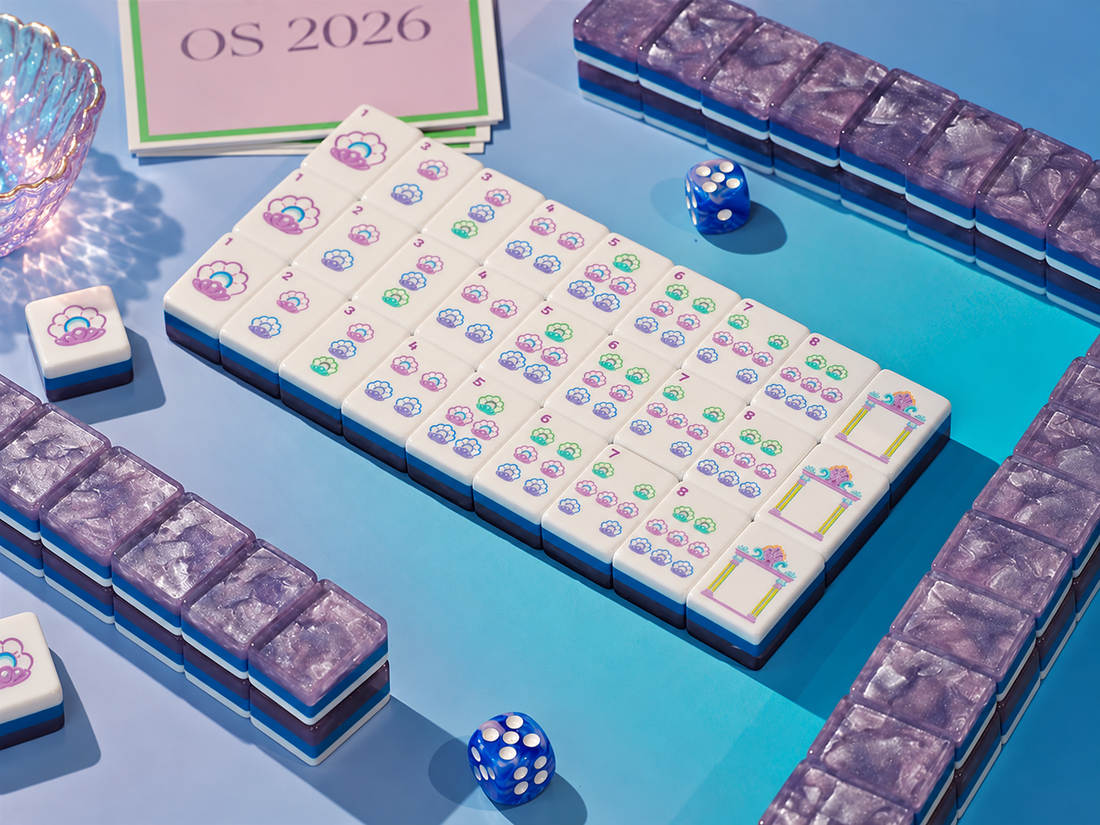
Gift & Collector Editions
Coordinate decorative tile appearances with branded presentation and gift packaging.
Private-Label Wholesale Programs
Define finish references and approved color versions for branded wholesale ranges.
Frequently Asked Questions
View All FAQsWhat makes a specialty-finish acrylic mahjong tile different from a standard or layered tile?
A specialty finish focuses on the visual appearance of the tile, such as pearlescent color, gradient effects, decorative backs, or reflective details. A standard custom tile may use conventional colors and printed artwork, while a layered tile is defined more by its construction and visible layers. These features can overlap, but a decorative finish does not automatically require additional acrylic layers. The actual difference should be defined through the selected material, surface effect, artwork method, and approved sample.
What is the difference between pearlescent, glitter, and iridescent-looking mahjong finishes?
Pearlescent finishes generally create a soft, pearl-like luster. Glitter effects emphasize visible sparkling particles or decorative specks, while iridescent-looking effects can show changing colors or reflections depending on the light and viewing angle. Their appearance may come from specially formulated materials, decorative layers, or other suitable methods. They are not interchangeable manufacturing processes. Provide visual references and identify whether the effect should be part of the material or an applied decoration so feasibility and sample requirements can be assessed.
Can gradient or ombre colors be reproduced consistently across a full mahjong set?
Consistency depends on the selected gradient method, color references, artwork or material preparation, and the acceptable level of variation. A controlled printed gradient may have different repeatability requirements from an effect created through decorative material variation. Specify whether every tile should show the same gradient placement or whether defined variations are acceptable. If the gradient appears on tile backs, it must not make individual tiles recognizable during gameplay. Representative samples and approved comparison criteria should be established before bulk production.
Can mahjong tile backs have textured patterns, and will they feel different during play?
A textured-looking back can be created visually through printed or decorative graphics without necessarily having a raised surface. An actual tactile texture changes the physical surface and may affect tile handling, stacking, cleaning, or wear. Not every decorative pattern requires a special surface treatment. Specify whether you want a visual pattern or a physical texture, and provide an example of the desired result. Any tactile finish should be evaluated with the intended playing conditions before approval.
How can specialty tile backs remain uniform and prevent players from identifying hidden tiles?
Tile backs should have an approved common appearance without unintended differences that reveal or help identify specific tile faces. Check pattern placement, orientation, opacity, decorative particles, and visible finish variation across representative tiles. Transparent constructions should also be examined for front-face show-through under relevant lighting. If a finish naturally varies, the acceptable variation must be considered in relation to gameplay fairness. The complete collection should be assessed against defined visual requirements before bulk production approval.
Can specialty finishes affect tile-face readability, handling feel, or rack compatibility?
They can, depending on how the effect is produced. Strong reflections or decorative graphics may reduce contrast around tile-face symbols, while physical surface treatments or additional construction layers may change thickness, edge appearance, or handling feel. The final dimensions still need to suit the intended racks, pushers, and storage accessories. Review the finish with representative face artwork, actual tile dimensions, and relevant accessories. The decorative effect should not be approved independently of the tile's playing function.
Can one custom mahjong collection include different finish colors or back-pattern versions?
Different colorways or finish versions can be evaluated as separate product configurations. Each version should have its own material or finish reference, back design, artwork, tile inventory, and order quantity. Within a single playing set, the backs should meet the agreed consistency requirements so tiles are not unintentionally distinguishable. Different decorative materials or printing arrangements may require separate samples and production setup. Use clear SKU identifiers and approved reference samples to avoid mixing specifications during packing and future orders.
How should abrasion, fading, decorative-particle loss, and cleaning compatibility be evaluated?
The relevant checks depend on whether the effect is integrated into the material, printed, coated, or attached through another method. These constructions can respond differently to handling, friction, light exposure, and cleaning products. A material-integrated effect should not automatically be assumed to have the same performance as an applied surface finish, or vice versa. Identify the expected playing frequency, storage conditions, and care requirements. Appropriate sample evaluations and supplier guidance should support any published durability or cleaning claims.
What should be approved on a specialty-finish mahjong tile sample before bulk production?
Sample approval should cover color references, pearlescent or reflective appearance, gradient placement, back-pattern consistency, face-artwork readability, finished dimensions, and edge quality. Review representative tile types and more than one example of the decorative finish where variation is possible. Check for unwanted visual defects, surface irregularities, or process-specific issues identified in the specification. Confirm that tile backs do not unintentionally reveal identities during play. Record the approved appearance, allowable variation, and any required handling or durability checks before production.
What affects MOQ, pricing, and production time for custom specialty-finish mahjong tiles?
MOQ, pricing, and production timing depend on the selected material, decorative method, number of colorways, tile dimensions, artwork, finishing steps, and order quantity. Special material sourcing, gradient preparation, or additional sample approval may introduce requirements different from standard tile production. For a quotation, provide finish references, face and back artwork, complete tile inventory, finished dimensions, quantities per version, packaging details, destination, and target date. Costs and schedules should be confirmed after reviewing the actual construction and manufacturing feasibility.
Ready to Start Your Display Project?
Share your product, dimensions and quantity to discuss the next step.